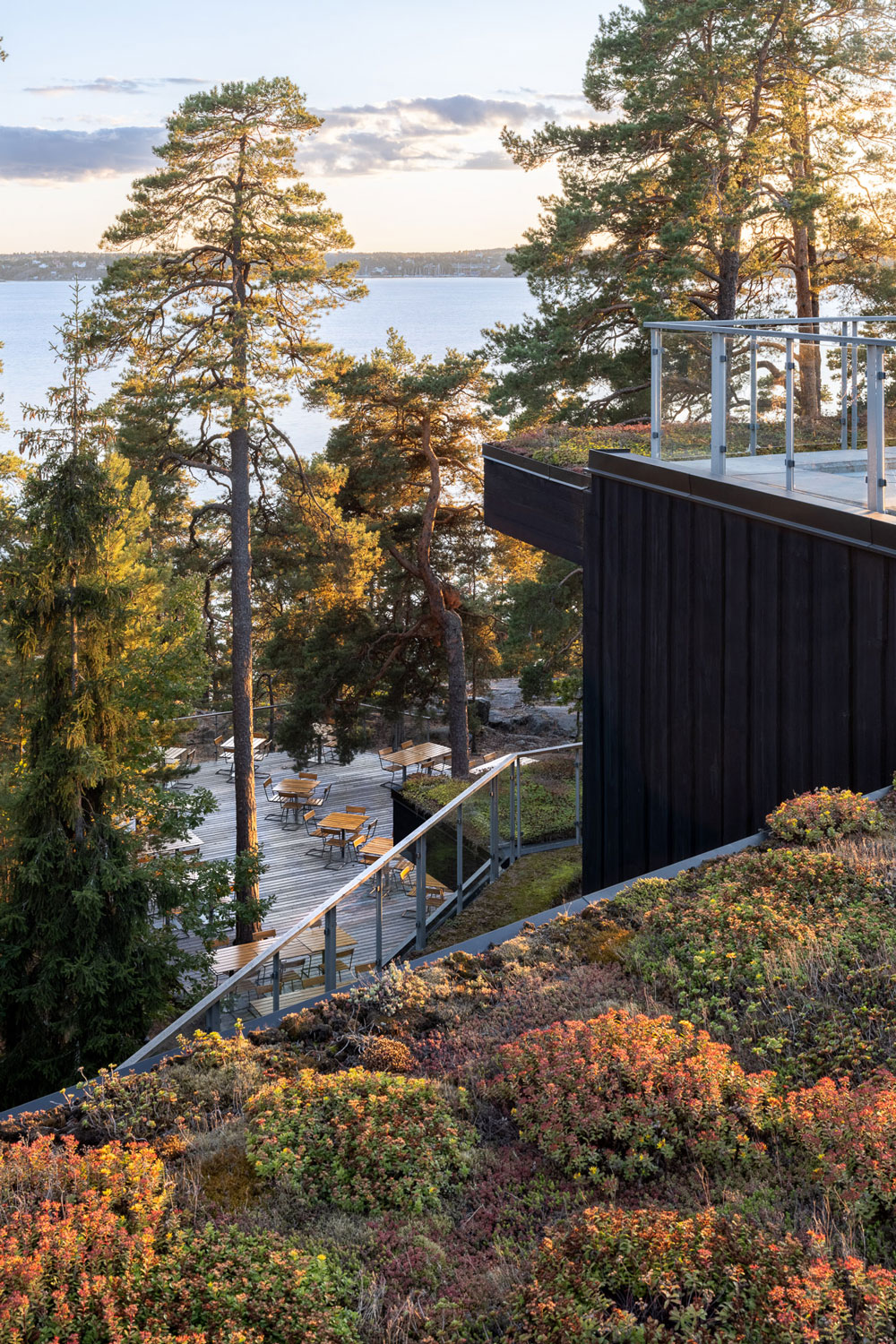
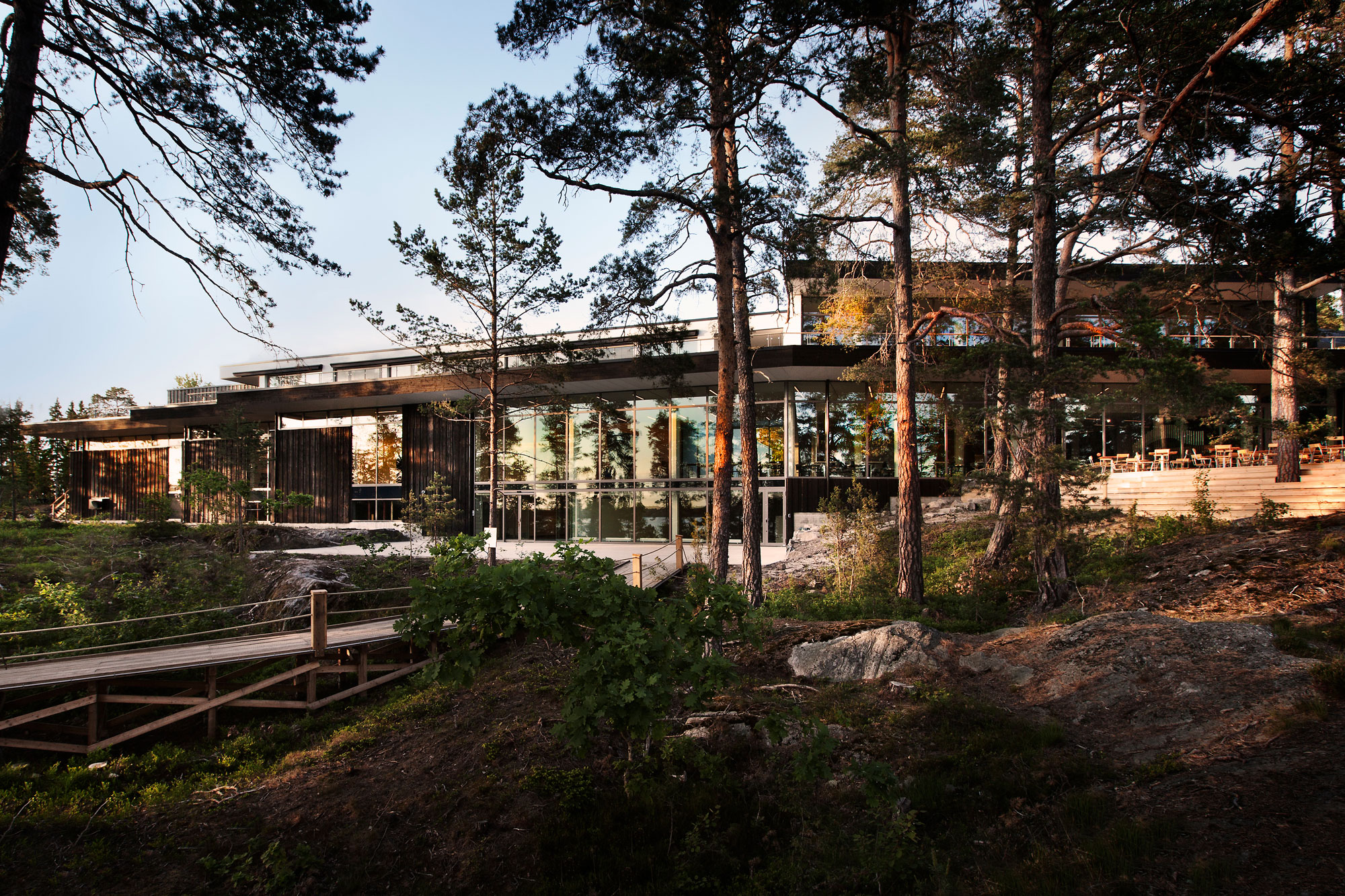
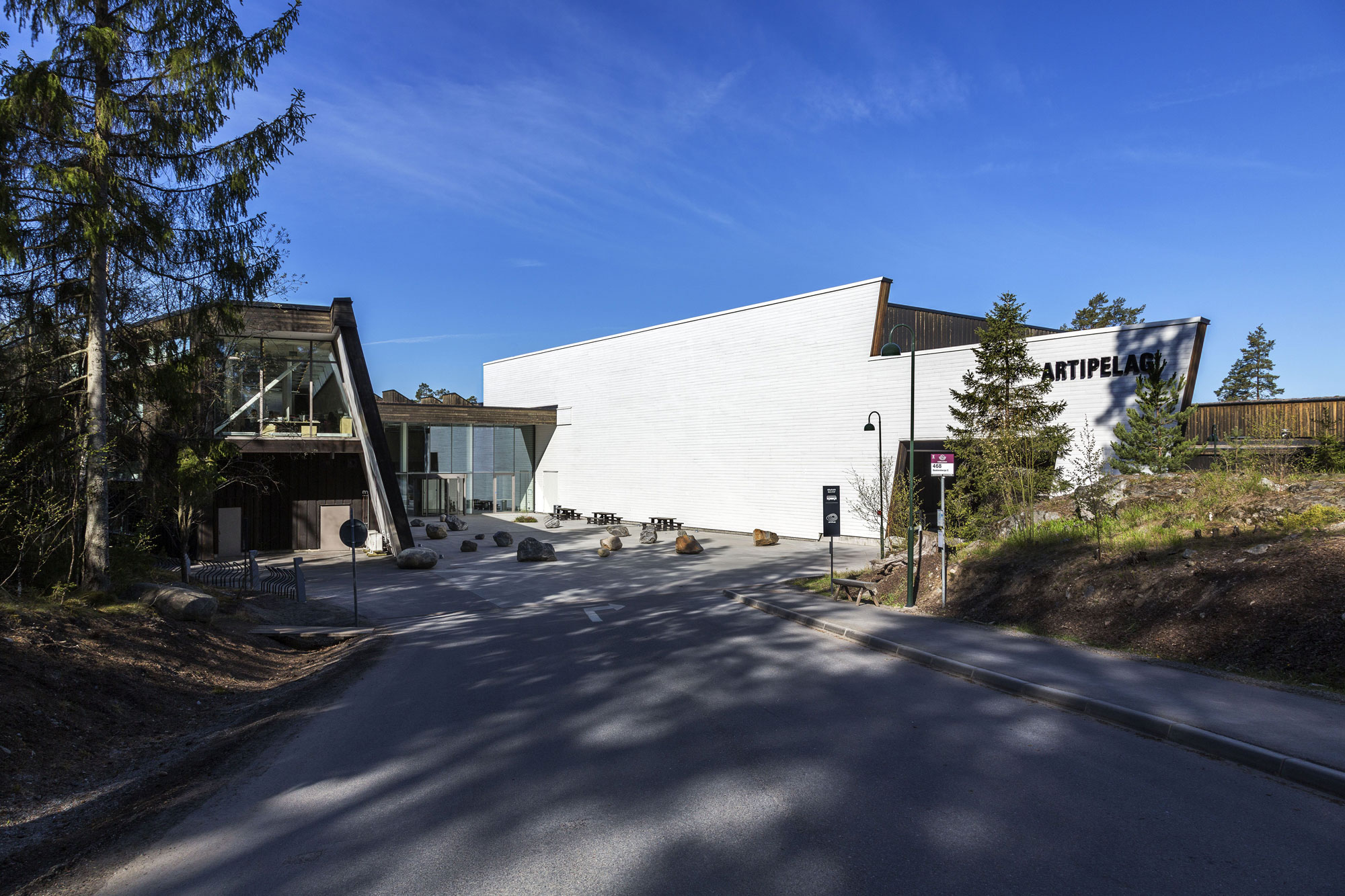
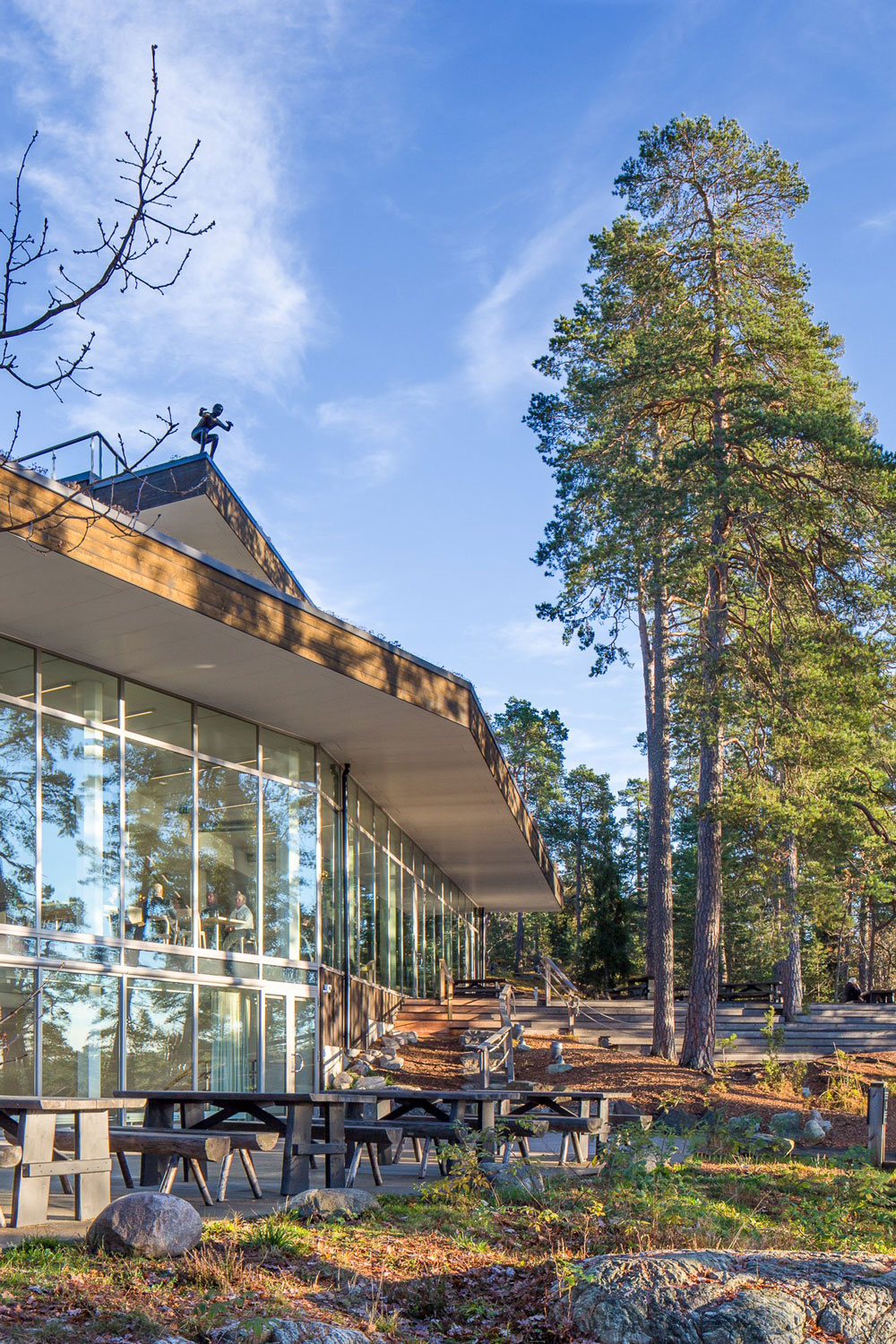
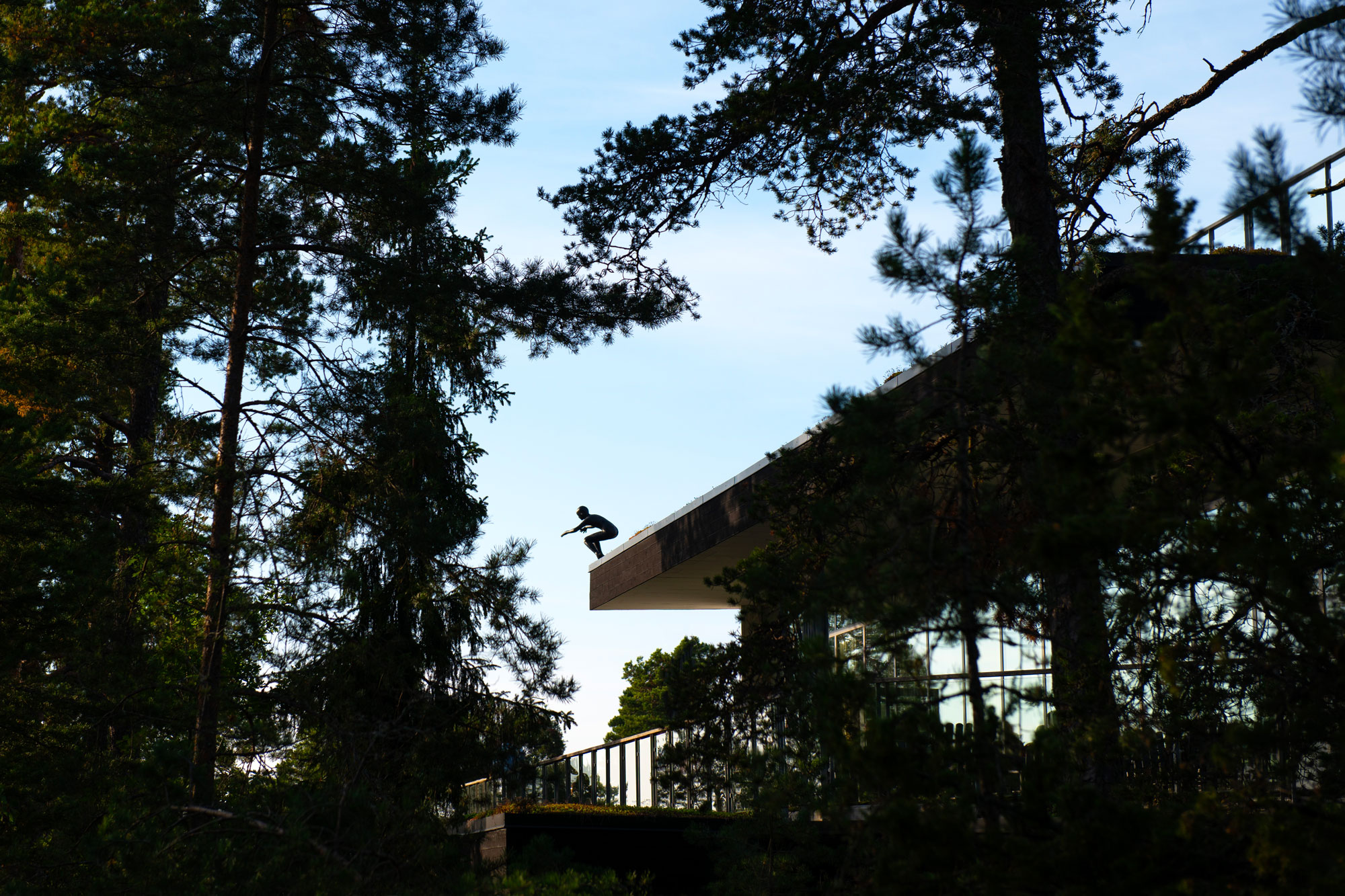
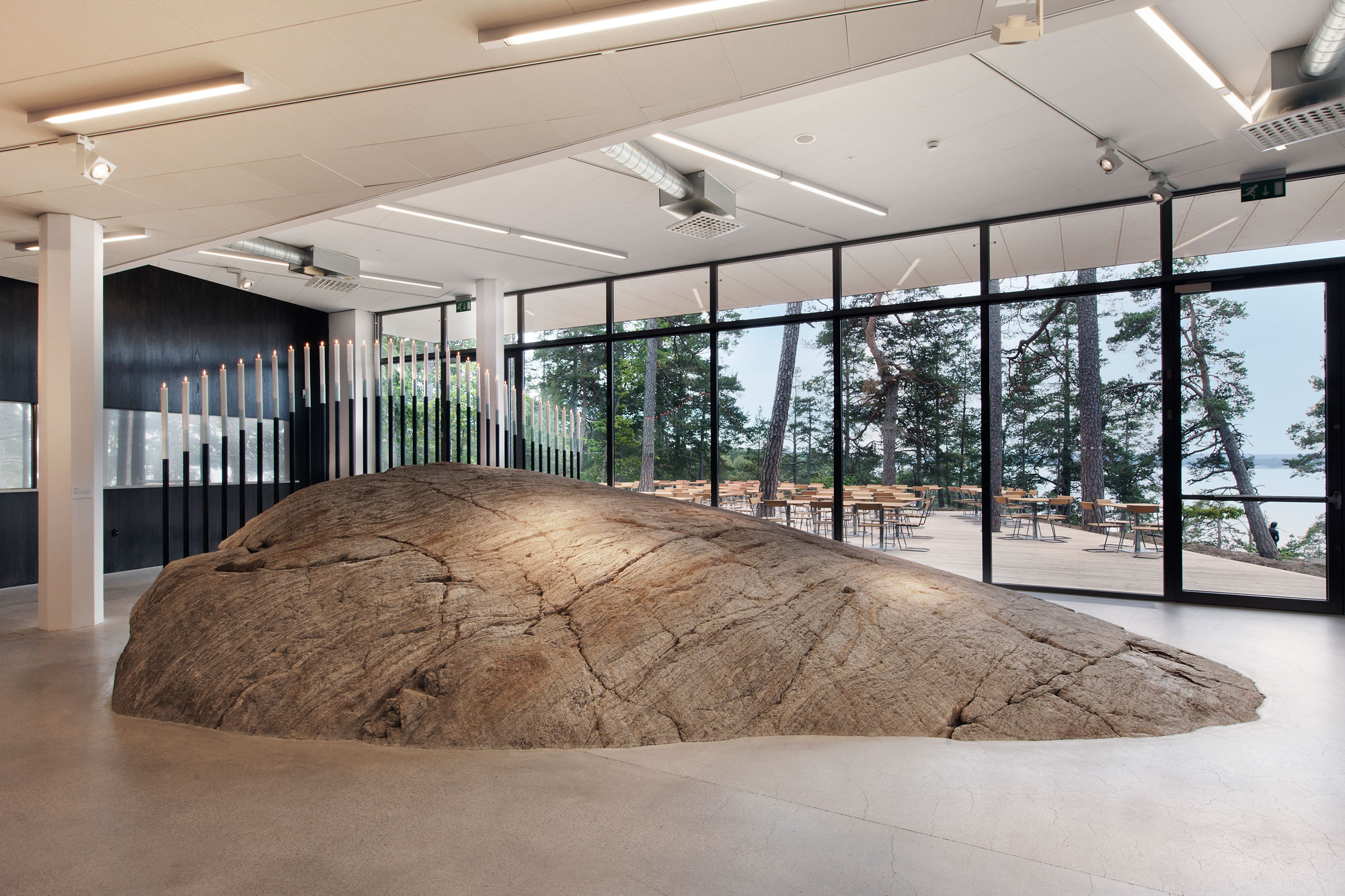
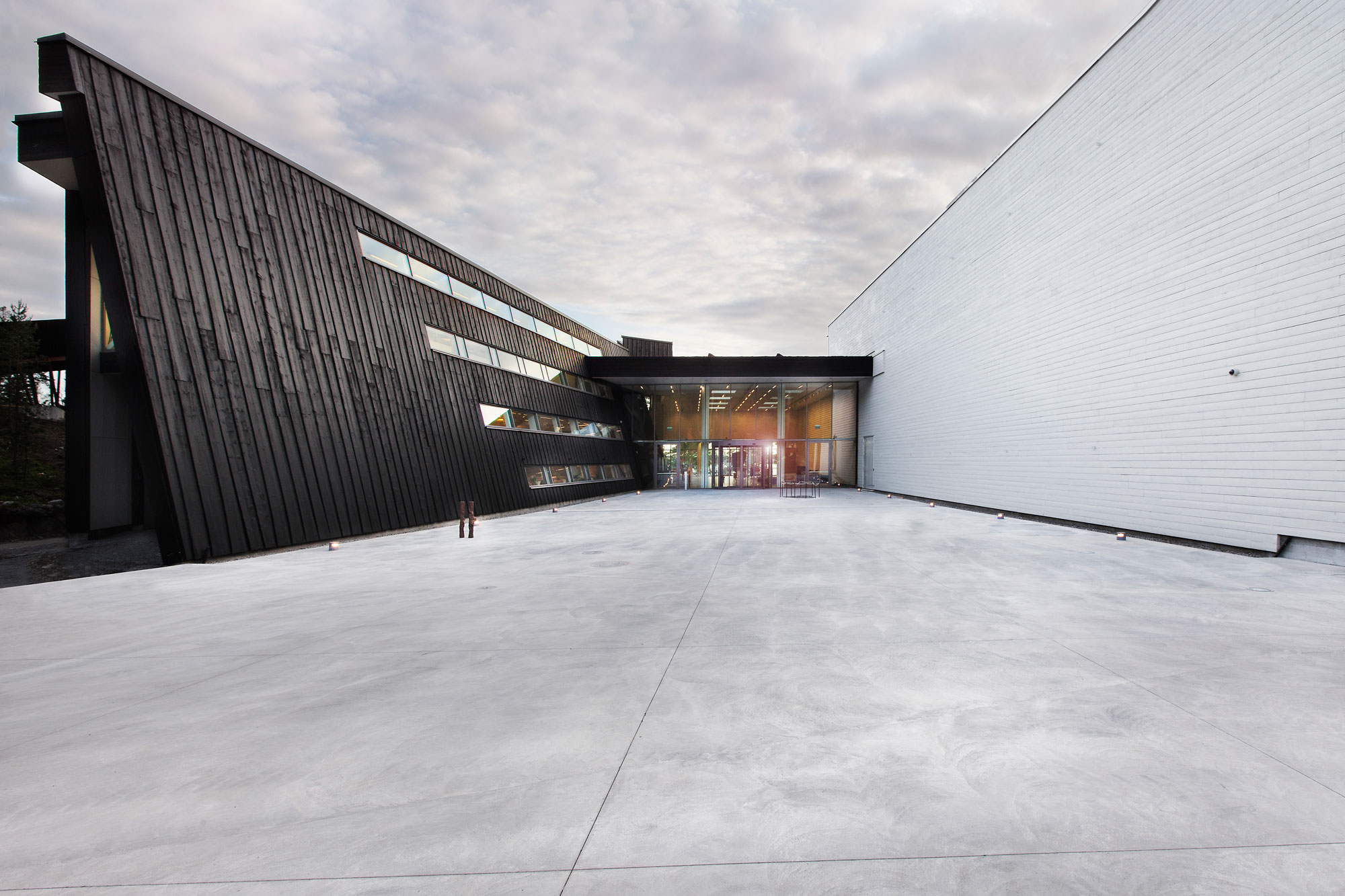
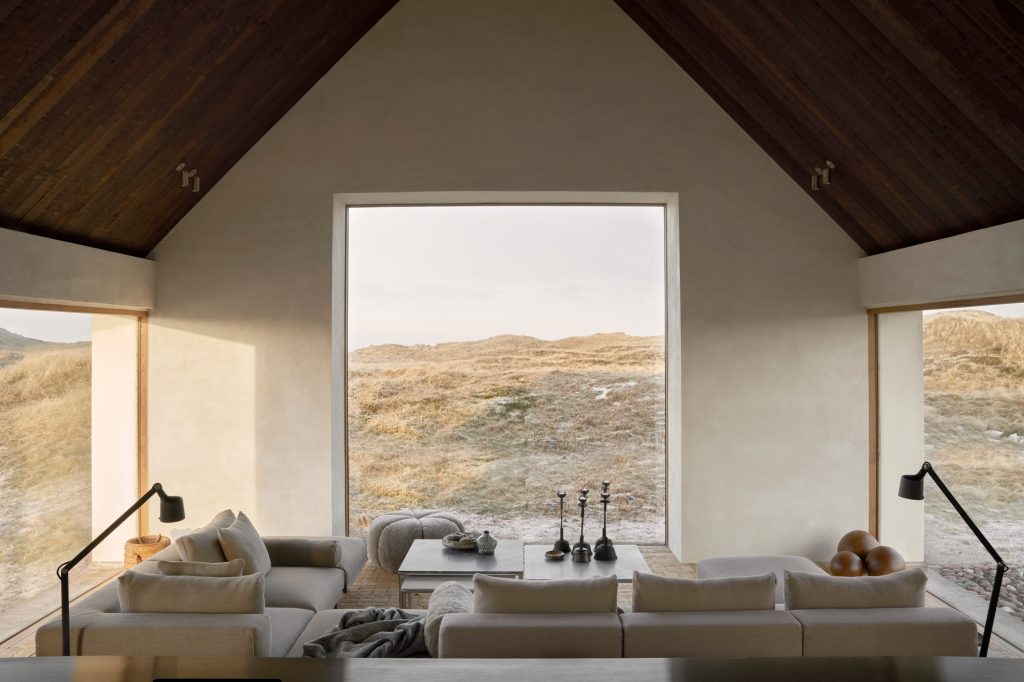
Artipelag opened in 2012 as the vision of Björn Jakobson, founder of Swedish baby products company BabyBjörn, and his wife Lillemor, who has a background in art and design. Their ambition was to bring together contemporary art, architecture and the surrounding archipelago landscape. Even the name combines the words art and archipelago.
The institution hosts changing exhibitions of art and design, alongside an outdoor sculpture collection. Its programme has included Morandi / Edmund de Waal (2017), Fornasetti Inside Out Outside In (2019–2020), Anselm Kiefer’s Essence-Eksistence (2022–2023) and Berlinde De Bruyckere’s No Life Lost (2024).
Of the exhibitions we have experienced here, Morandi / Edmund de Waal remains a particular favourite. Bringing together the porcelain installations of British ceramicist Edmund de Waal with the still-life paintings of Italian artist Giorgio Morandi, it explored the relationship between objects, space and the act of looking.
Inner Child
The current programme includes Inner Child: Playing with Design, conceived exclusively for Artipelag by Dutch trend forecaster Lidewij Edelkoort and Australian design curator Philip Fimmano.
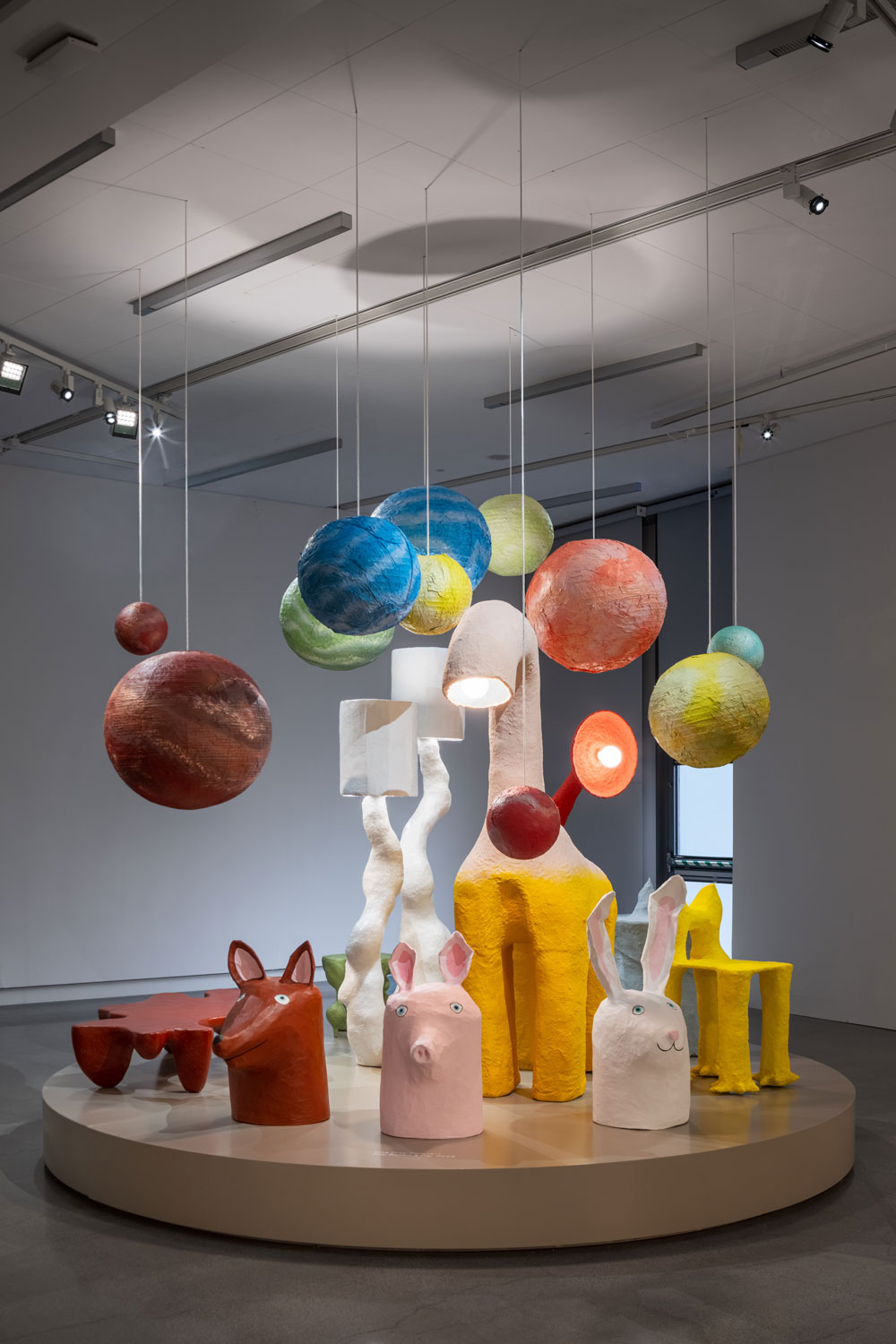
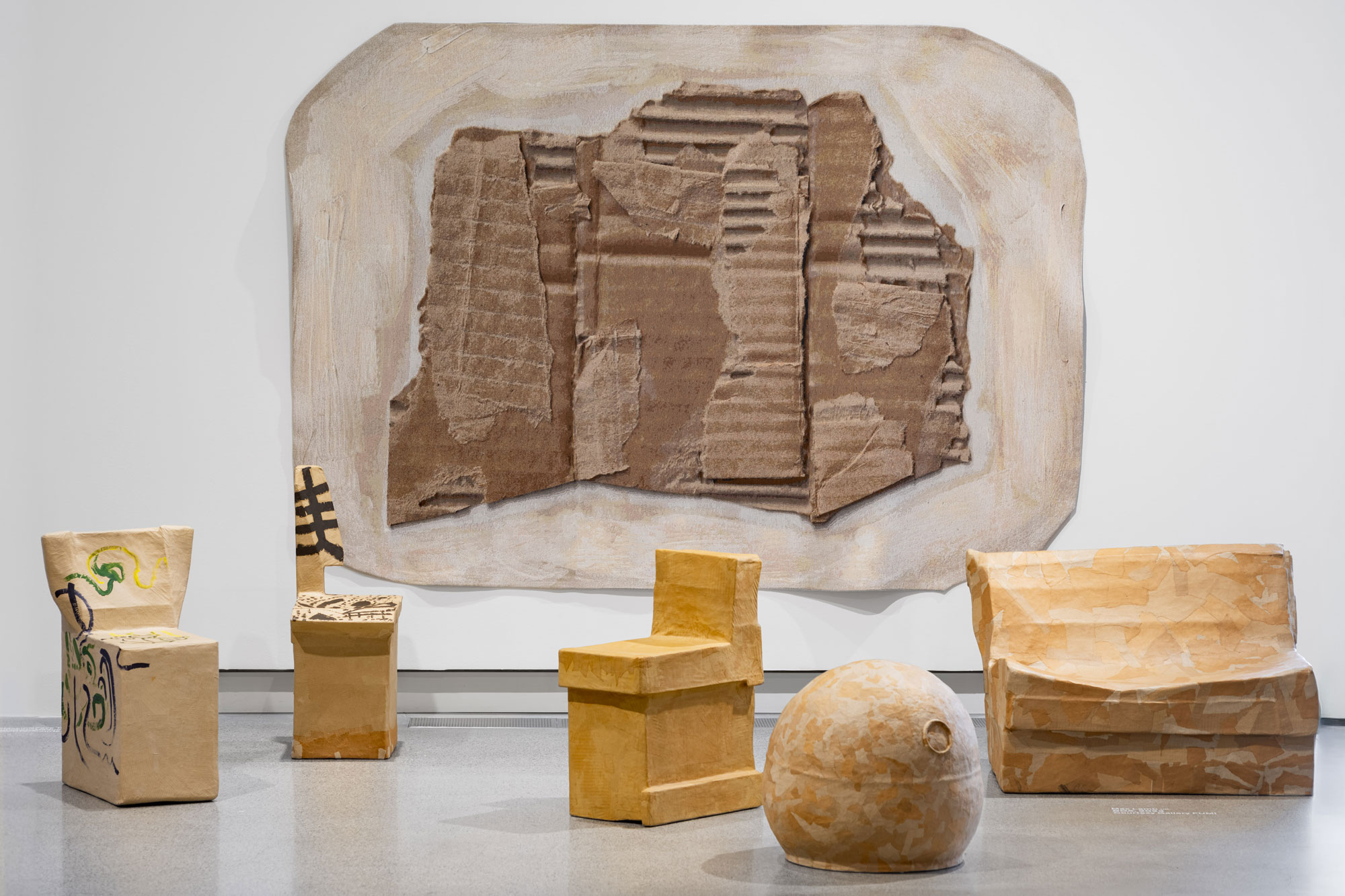
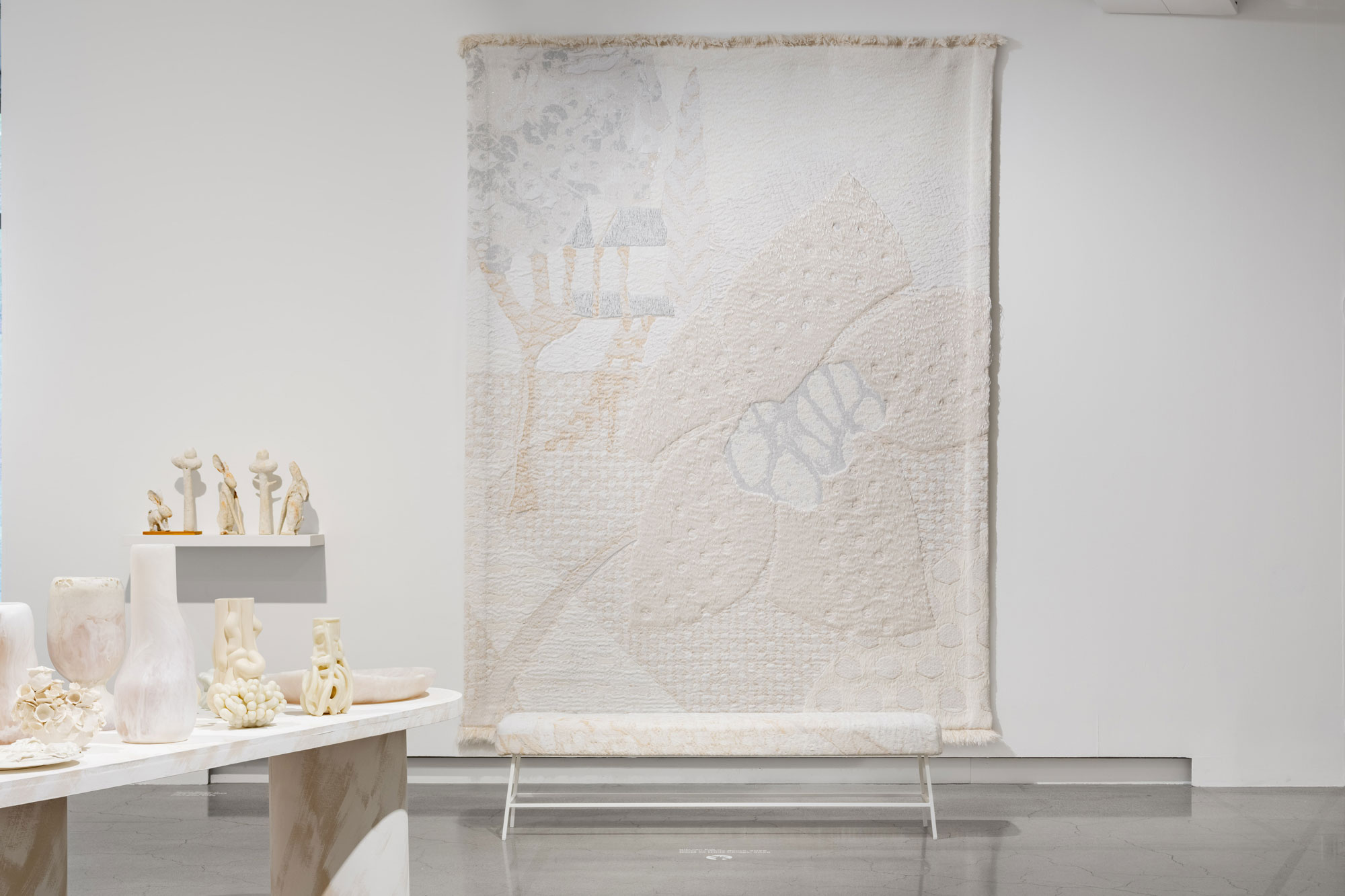
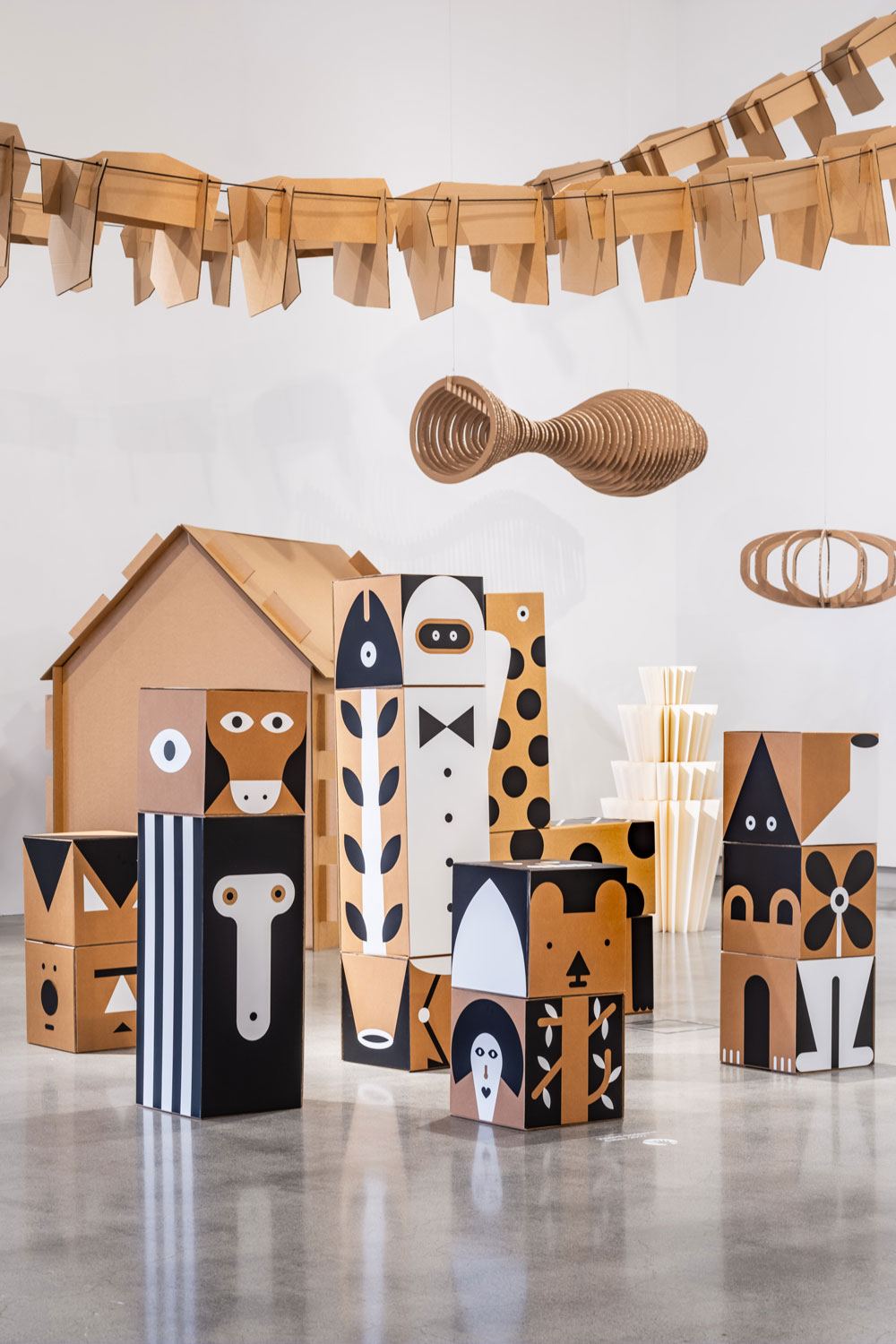
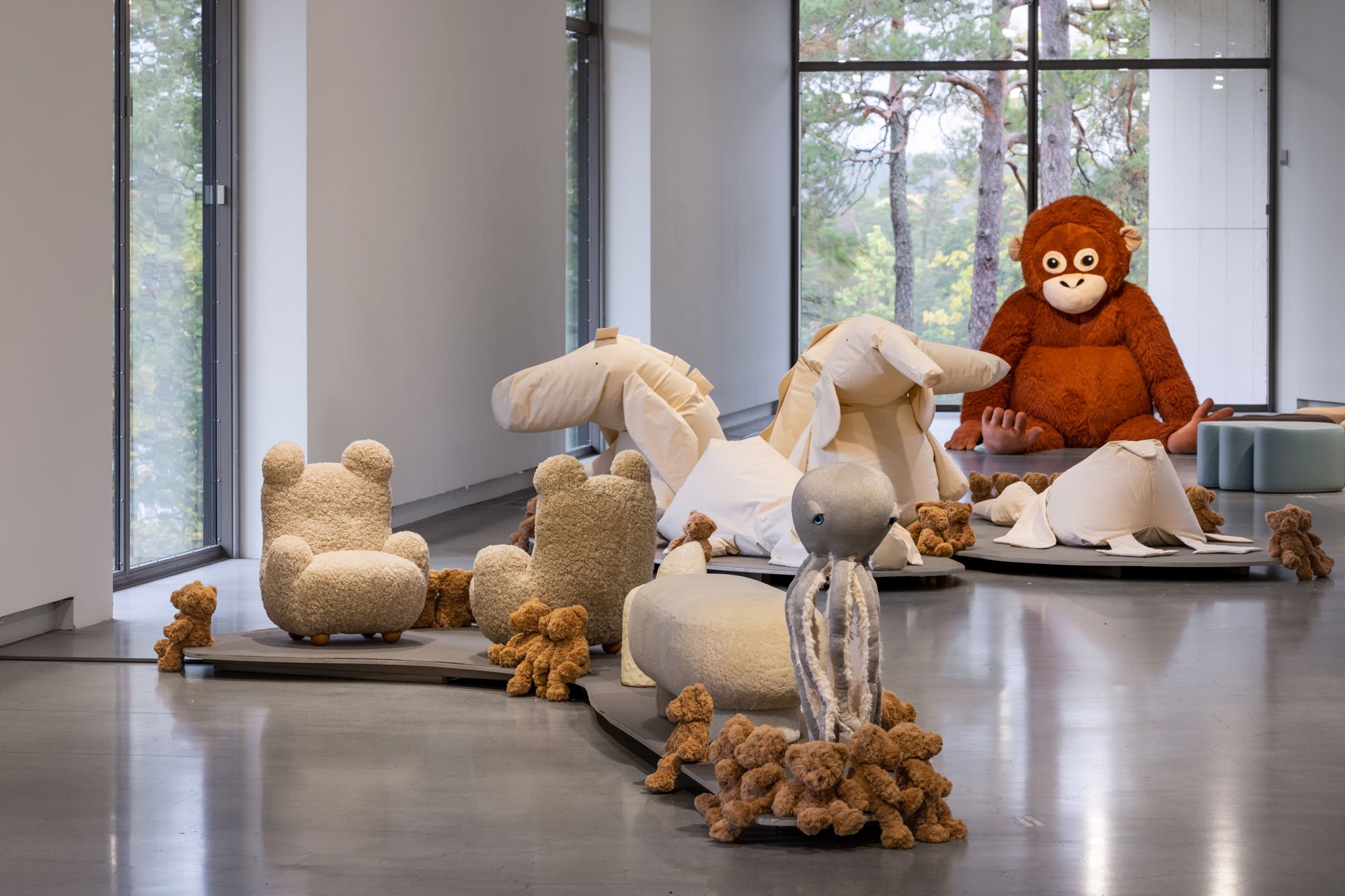
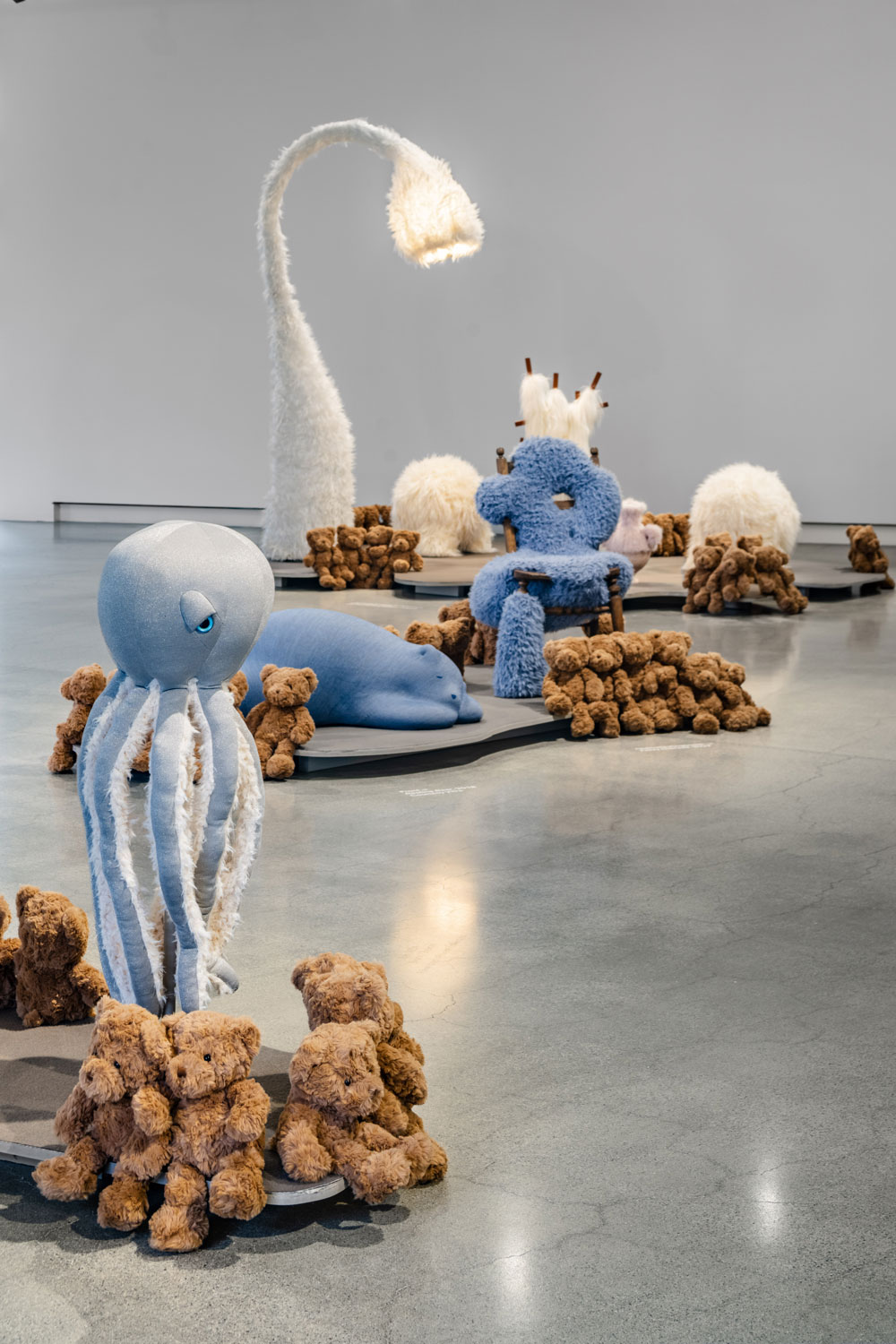
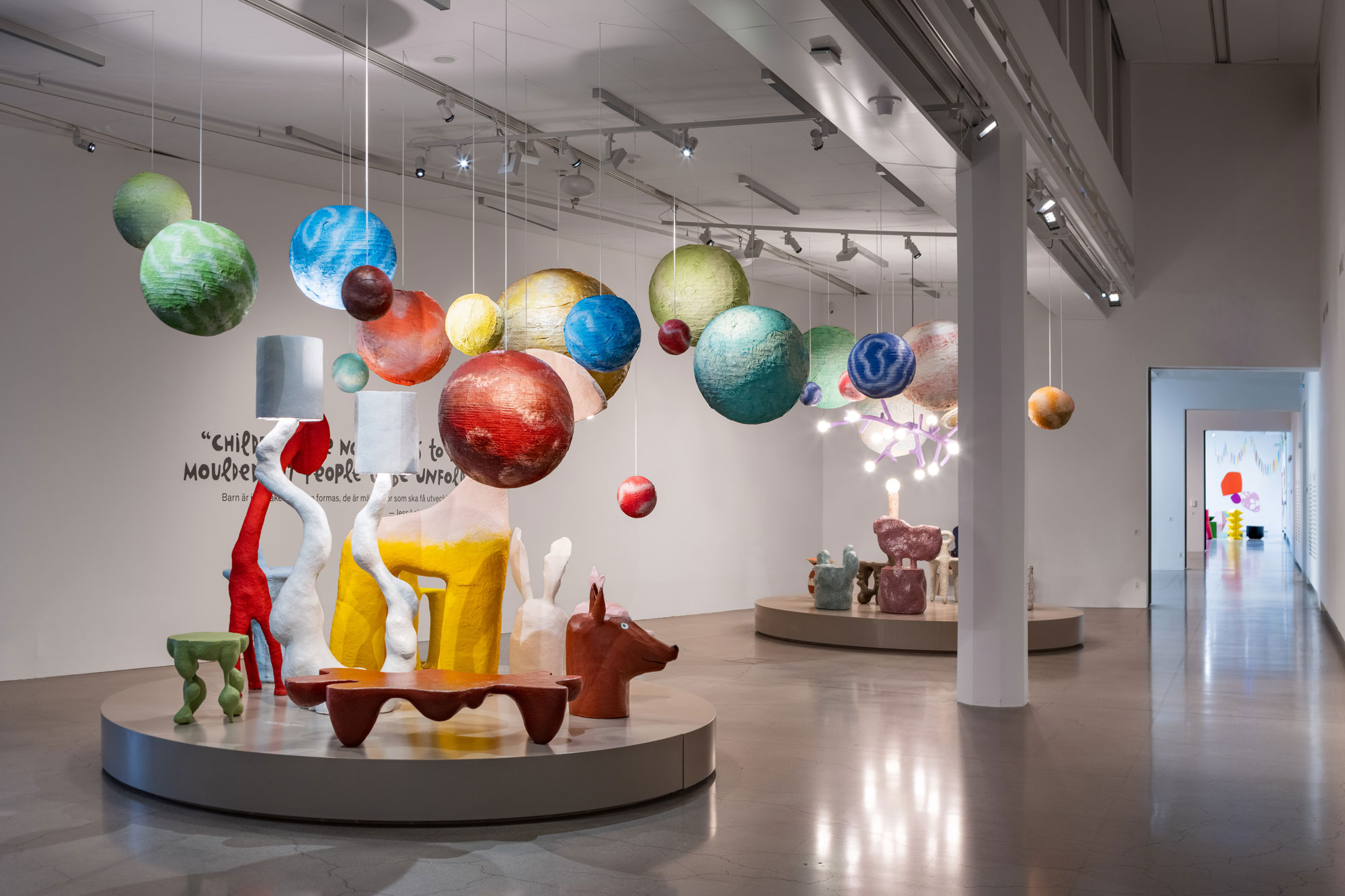
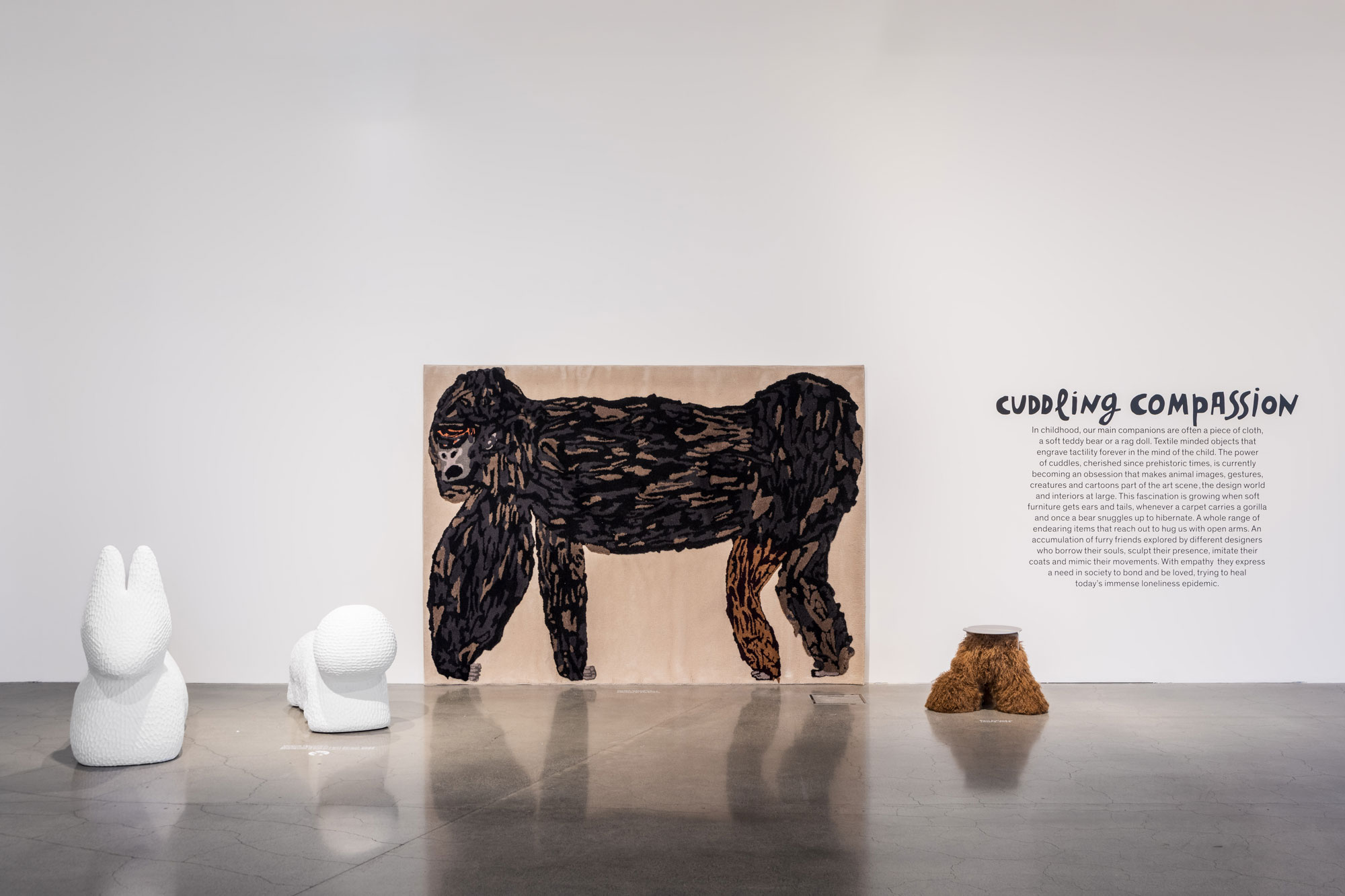
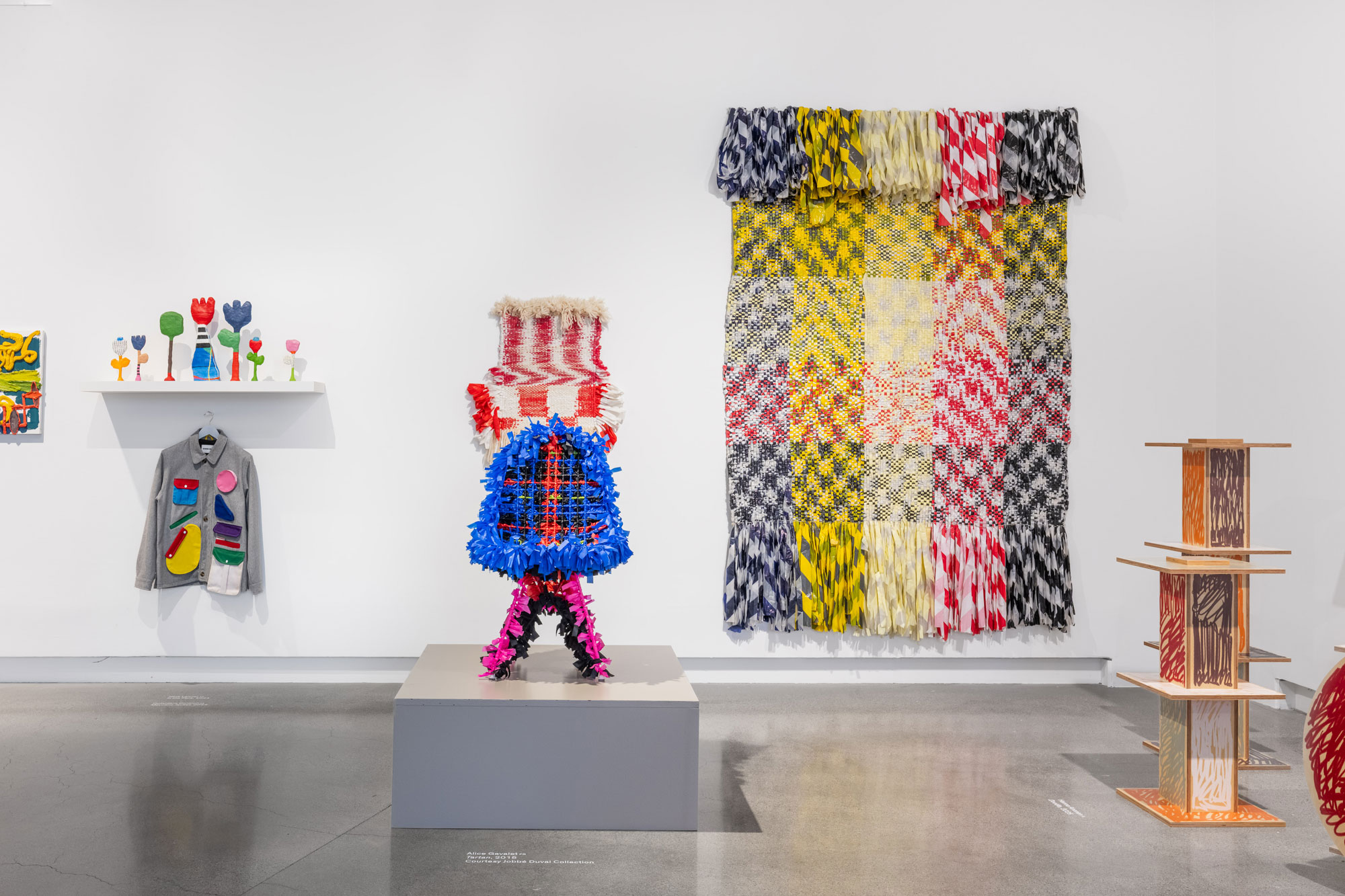
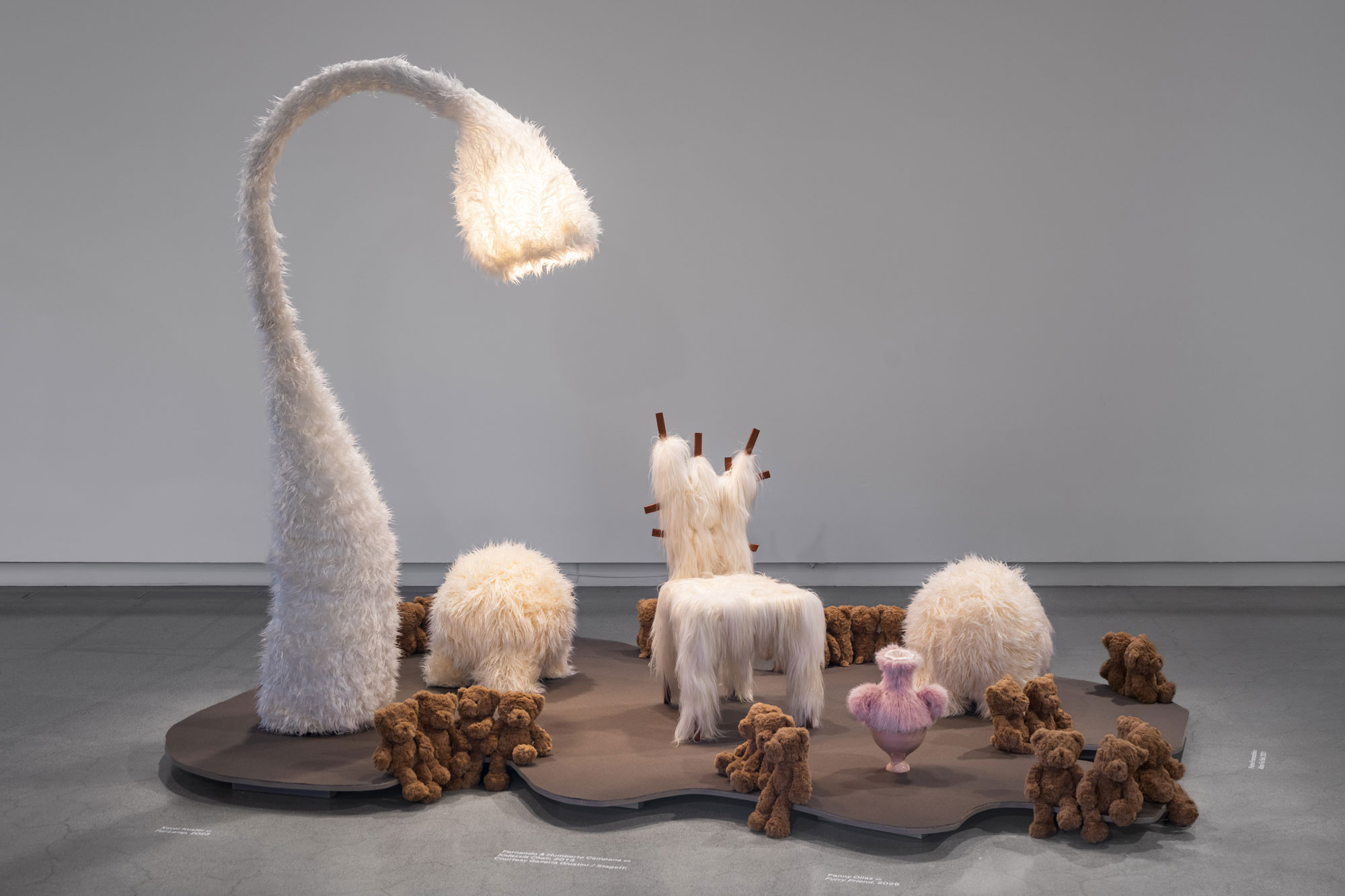
Bringing together more than 200 objects by over 100 designers and studios from 23 countries, the exhibition examines childhood as a source of creativity. Across eight thematic chapters, furniture, ceramics, textiles and installations explore curiosity, imagination and the pleasure of making things by hand. The curators also position this return to analogue techniques and experimentation as a response to technological change and an increasingly uncertain world.
Beyond the bright colours
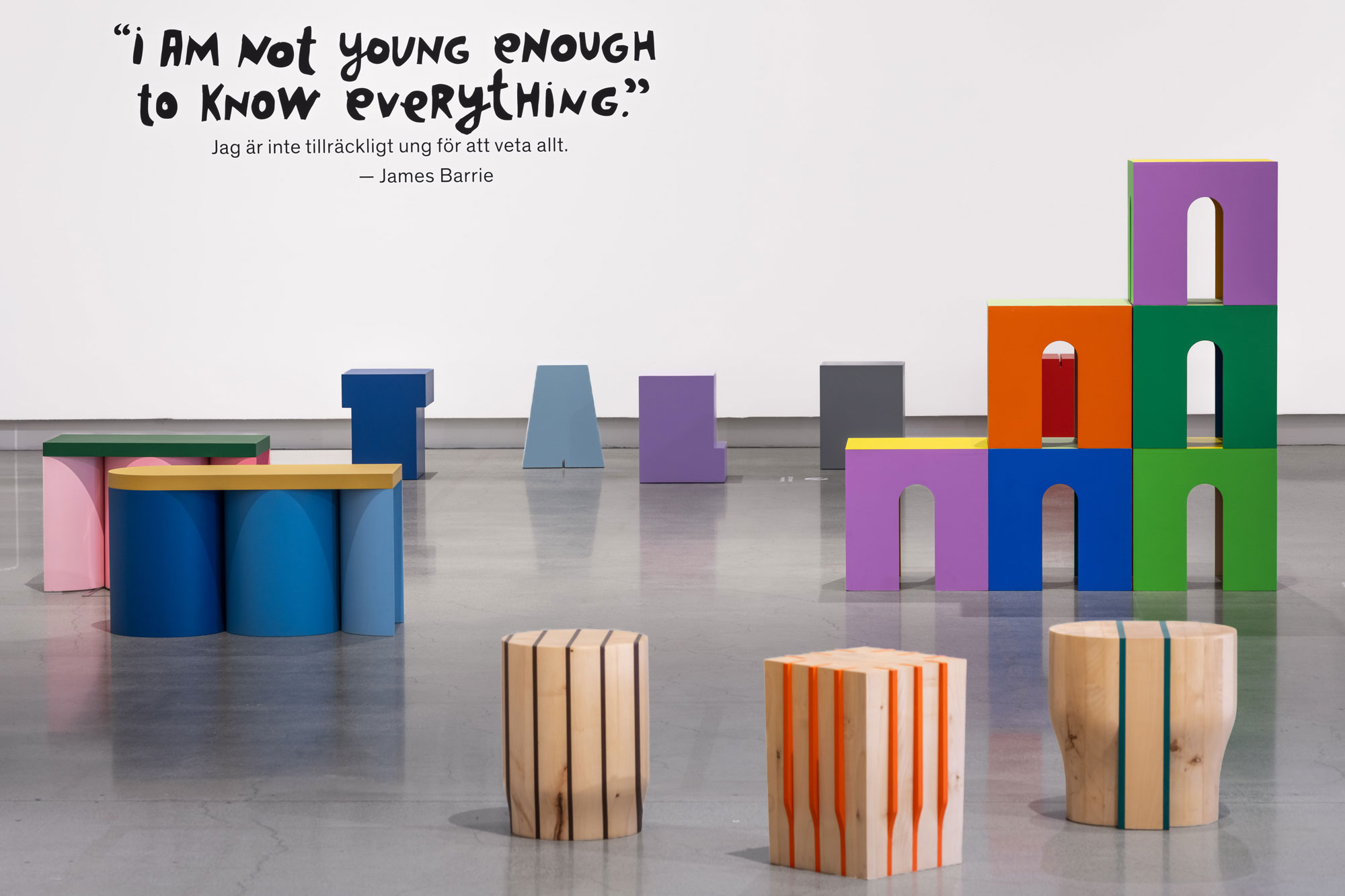
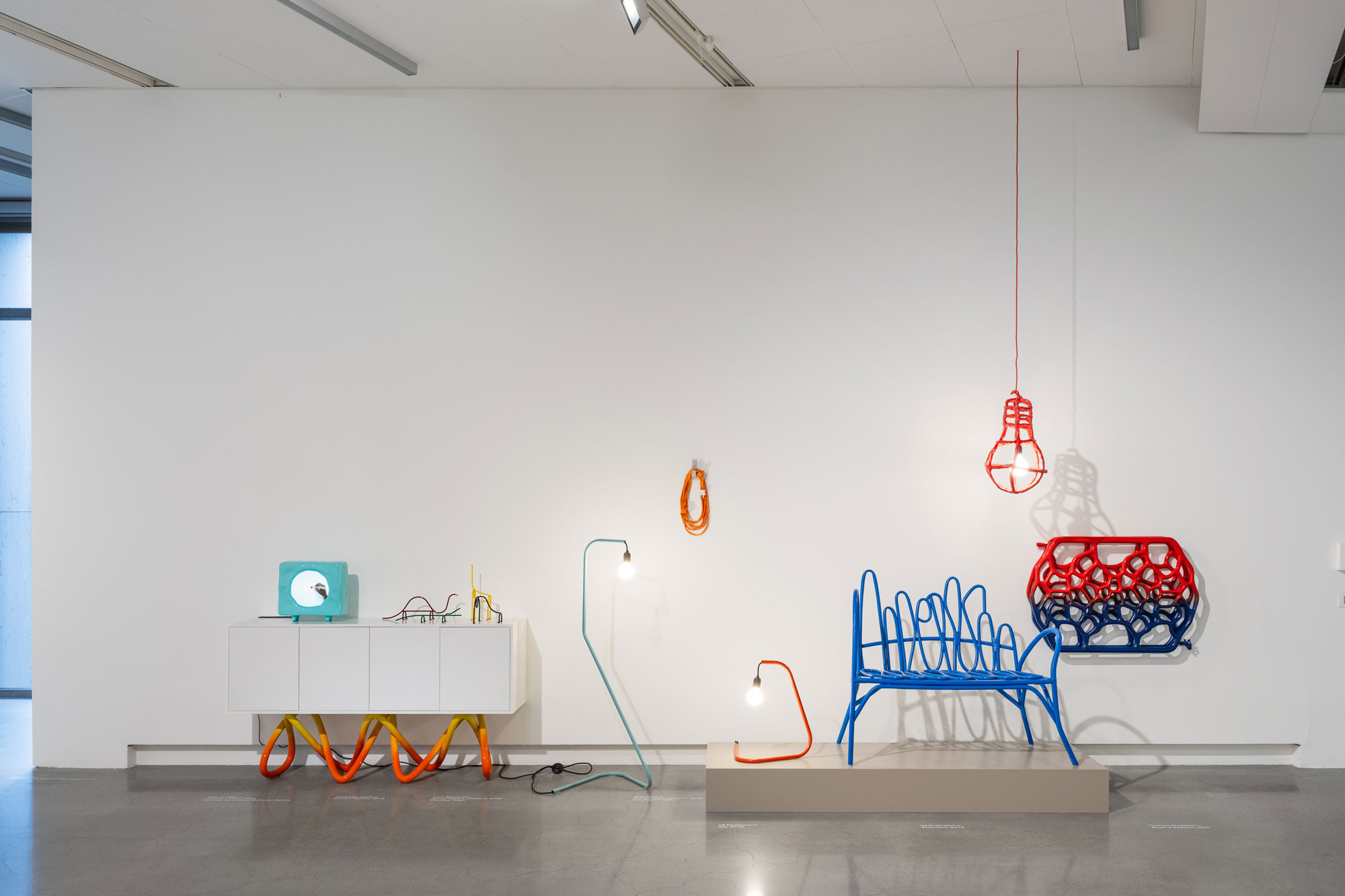
The opening room initially feels predictable. Brightly coloured blocks, patterns and playful shapes deliver the visual language we have come to expect from anything associated with childhood. It is certainly visually appealing, but hardly surprising.
The exhibition becomes increasingly interesting as you move through it. Each room introduces another perspective on play, gradually shifting attention from childlike forms to the creative processes behind them. What begins as an exploration of a familiar aesthetic develops into a examination of how we learn to create, experiment and judge our own ideas.
Growing up involves learning which materials are valuable, which colours are sophisticated, what looks professional and what deserves to be taken seriously. Eventually, these judgements become so familiar that nobody needs to enforce them. We do it ourselves.
Inner Child encourages us to question those assumptions. A playful-looking object is not necessarily the result of free experimentation, just as something unconventional is not automatically inventive. But the exhibition makes a convincing case for giving curiosity and imagination – even naiveté – greater room in the creative process.
The freedom to watch
One of the most refreshing aspects of Inner Child is that visitors are not expected to participate. Exhibitions dealing with play often include interactive elements, encouraging adults to rediscover their creativity through organised activities. The result can feel forced.
Here, we were content to remain observers. Not being invited to touch, build or play gave us room to look, think and respond to the objects on our own terms. It allowed the exhibition’s ideas to unfold without requiring us to perform the very behaviour it celebrates.
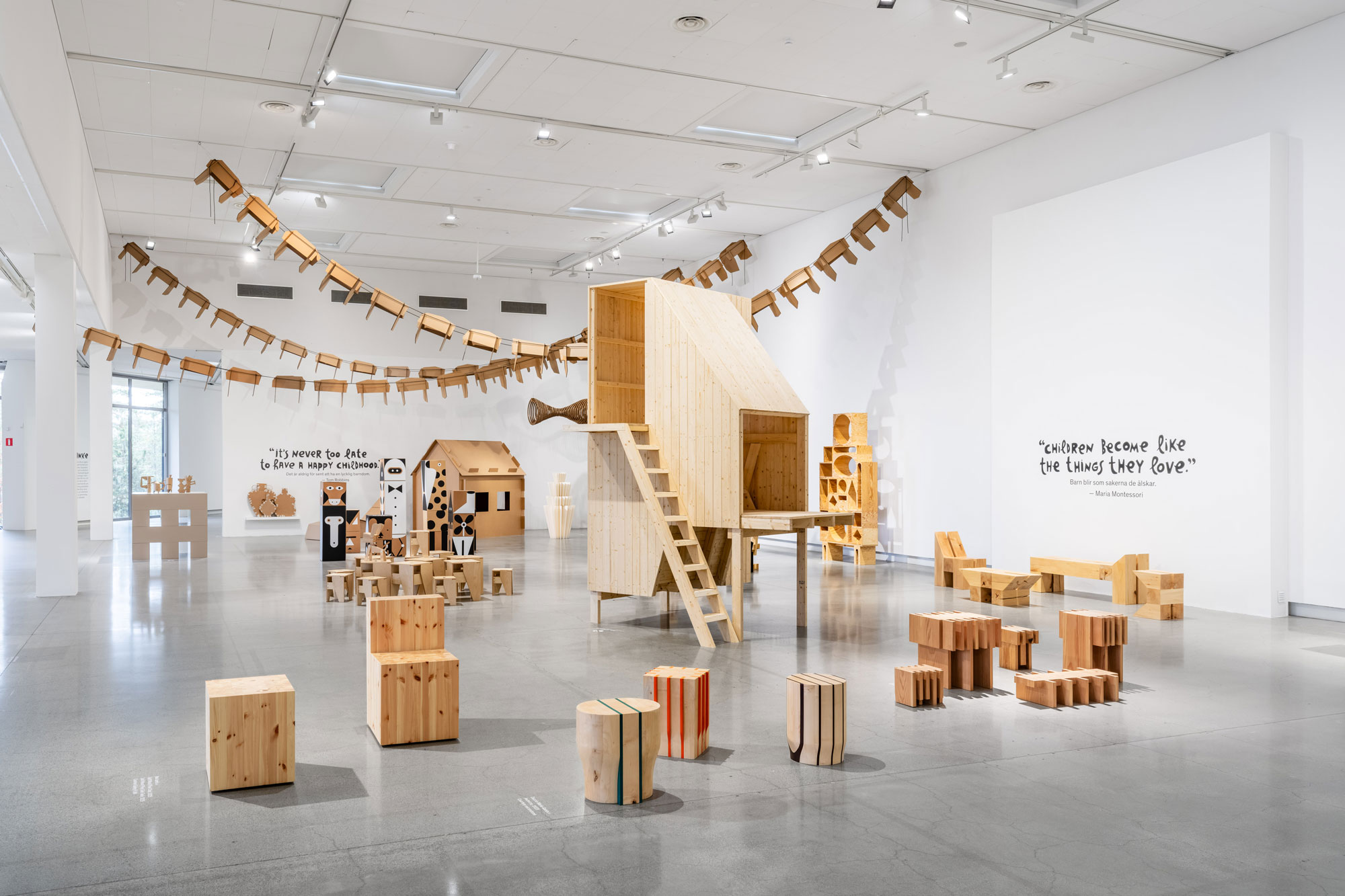
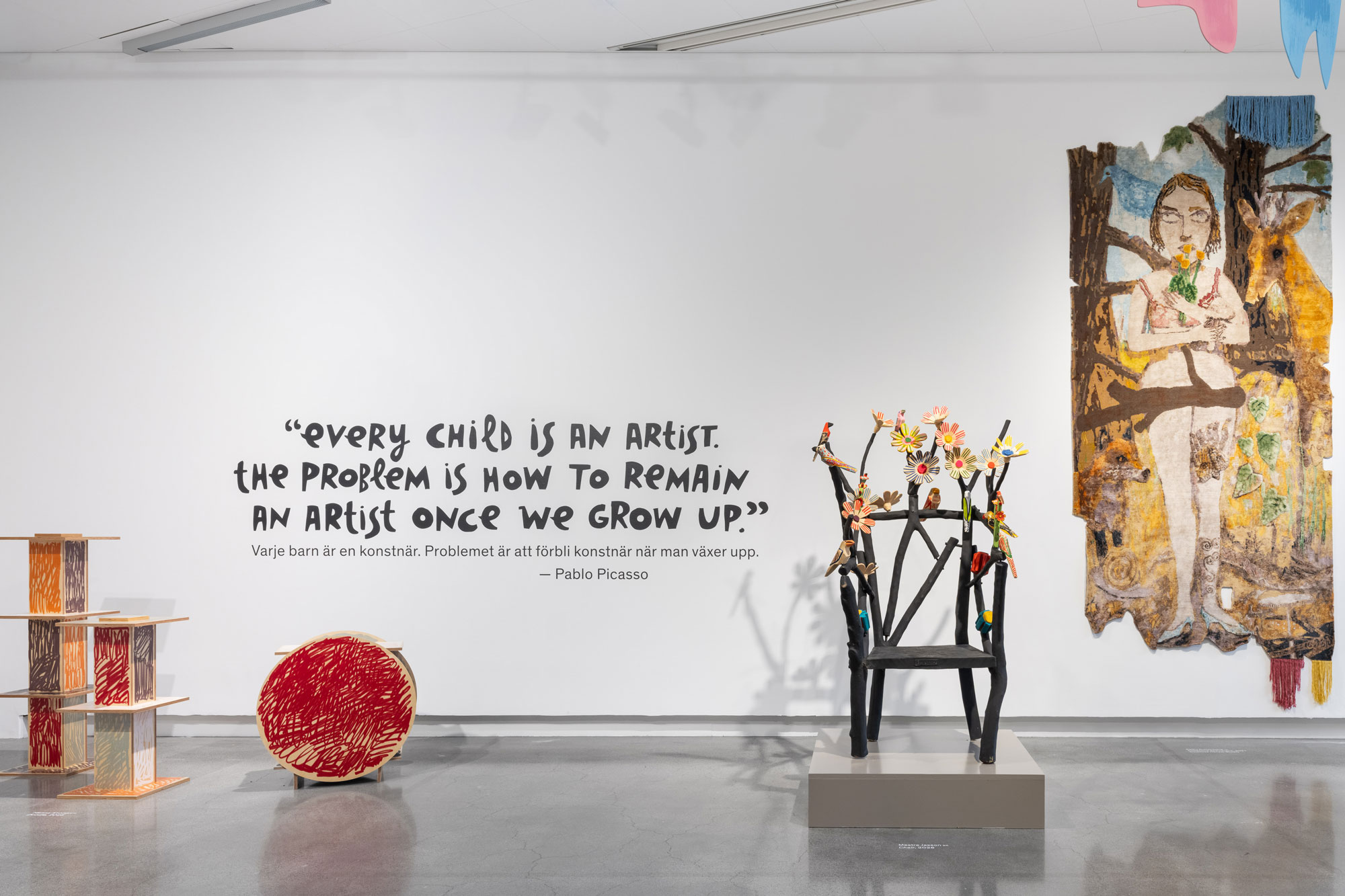
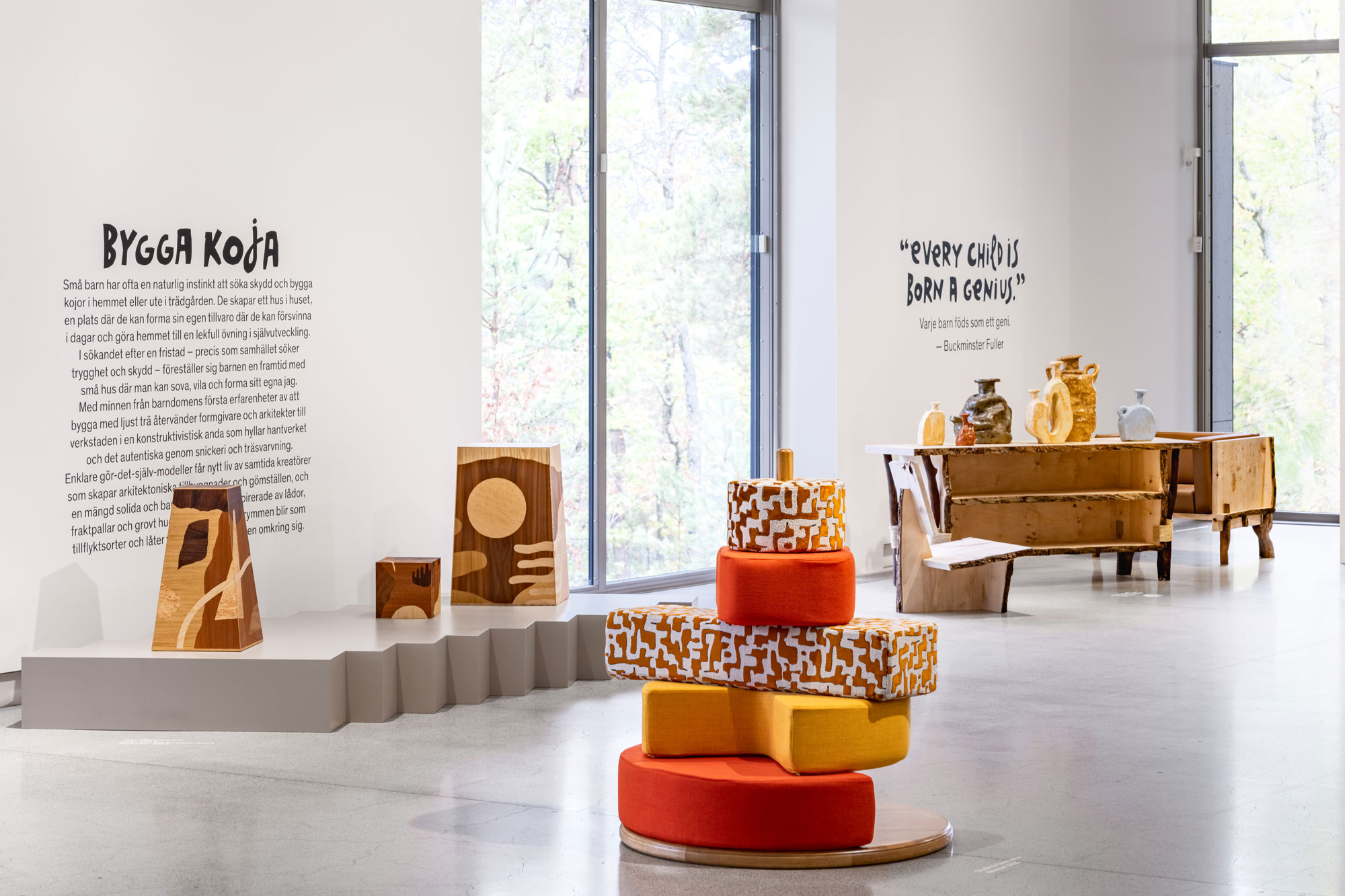
We also loved the quotations scattered across the walls. One reads, “It’s never too late to have a happy childhood”, while another recalls Winnie-the-Pooh’s observation about how even the smallest things can occupy the largest place in our hearts. The sentiments may be familiar, but they encourage the visitor to pause and reflect on what the objects bring to mind.
There is something valuable in that distance. An exhibition about creativity does not necessarily need to turn its audience into creators.
A strong Swedish presence
The international selection includes Maarten Baas, Yinka Ilori, Max Lamb, Pierre Yovanovitch and Faye Toogood, alongside a substantial group of Swedish contributors. Among them are Front, Gustaf Westman, Caroline Harrius, Fanny Ollas, Mattias Selldén, Carl Martinsson, Uglycute, Annika Wallström and Wang & Söderström.
Not everything feels new. Some works will be familiar to anyone who follows contemporary design, and a few have appeared so frequently in exhibitions and design media that their inclusion brings little surprise. Still, seeing such a broad selection of Swedish design alongside international contributions is one of the exhibition’s pleasures.
Setting the scene
The exhibition design attracted made us curious ahead of the opening, not least because it was created by Dutch designers Kiki van Eijk and Joost van Bleiswijk together with their children, Ko and Puk.
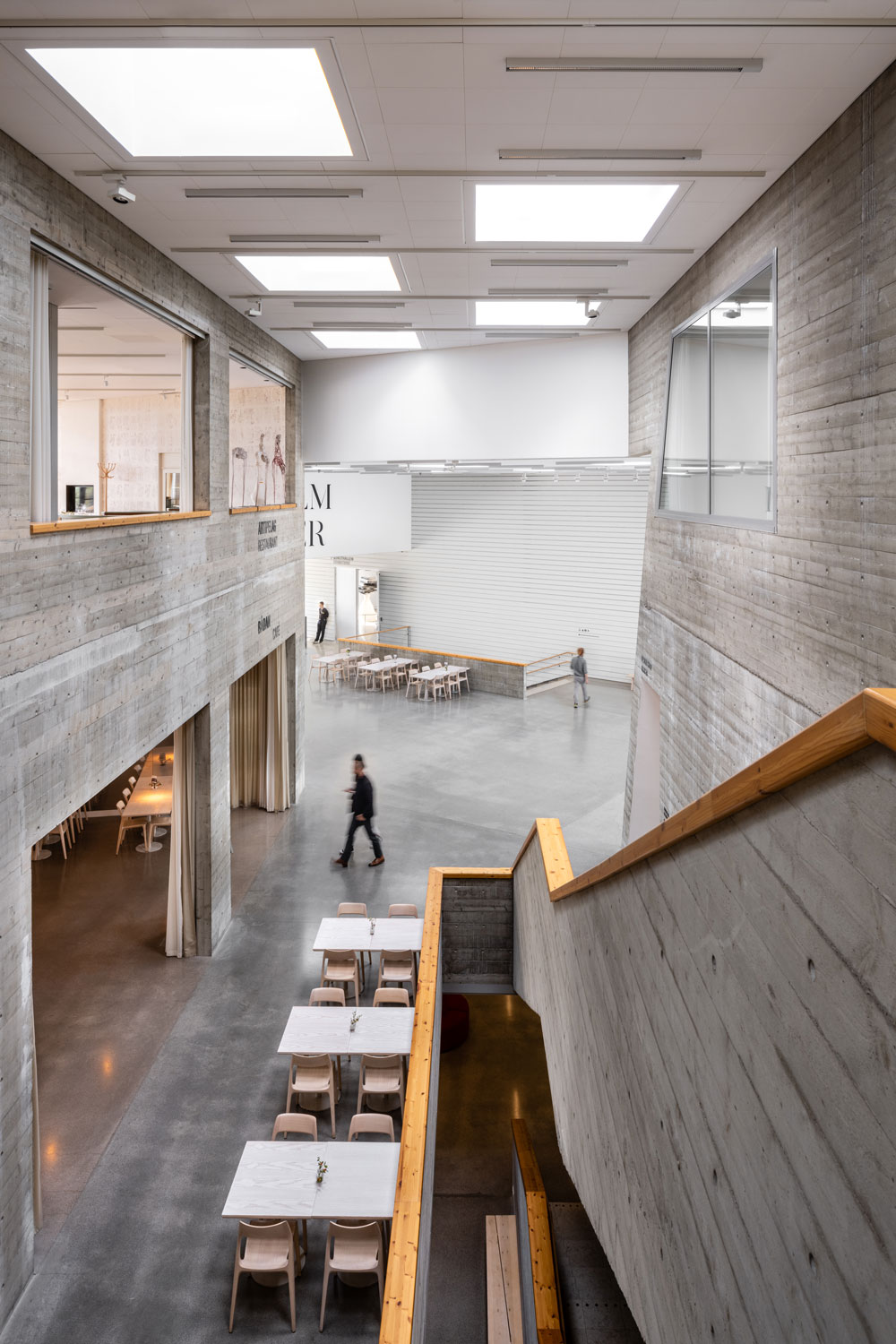
Given that family collaboration and the exhibition’s subject, we had expected the scenography to create a series of more distinct worlds. Instead, the presentation feels relatively restrained. Artipelag’s enormous galleries may be part of the challenge, making it difficult to create intimate environments with strong individual identities.
Although the physical settings do not always communicate the differences between the eight chapters as convincingly as we had hoped, the objects and ideas themselves provide plenty of variety and the exhibition rewards the time spent exploring it.