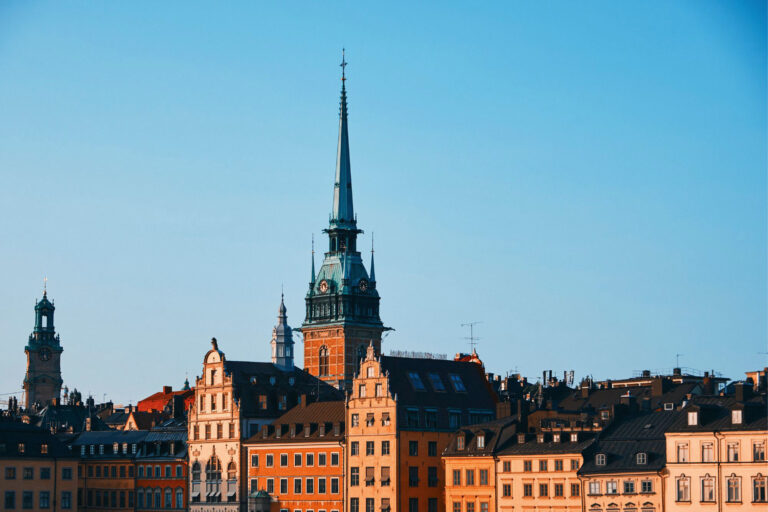
Discover what’s new before everyone else:
Get our free on-the-go Nordic hotspot map!
The Nordics • Insider guides • Why the Nordics lose their minds over Shrovetide buns
Every winter, the Nordics pick a short window to lose all self-control in a bakery queue. Shrovetide buns come with different names and different rules – Sweden’s semla, Finland’s laskiaispulla, Denmark and Norway’s fastelavnsbolle and Iceland’s bollur. Here’s how the calendar works and how the it-bun hunt takes over.
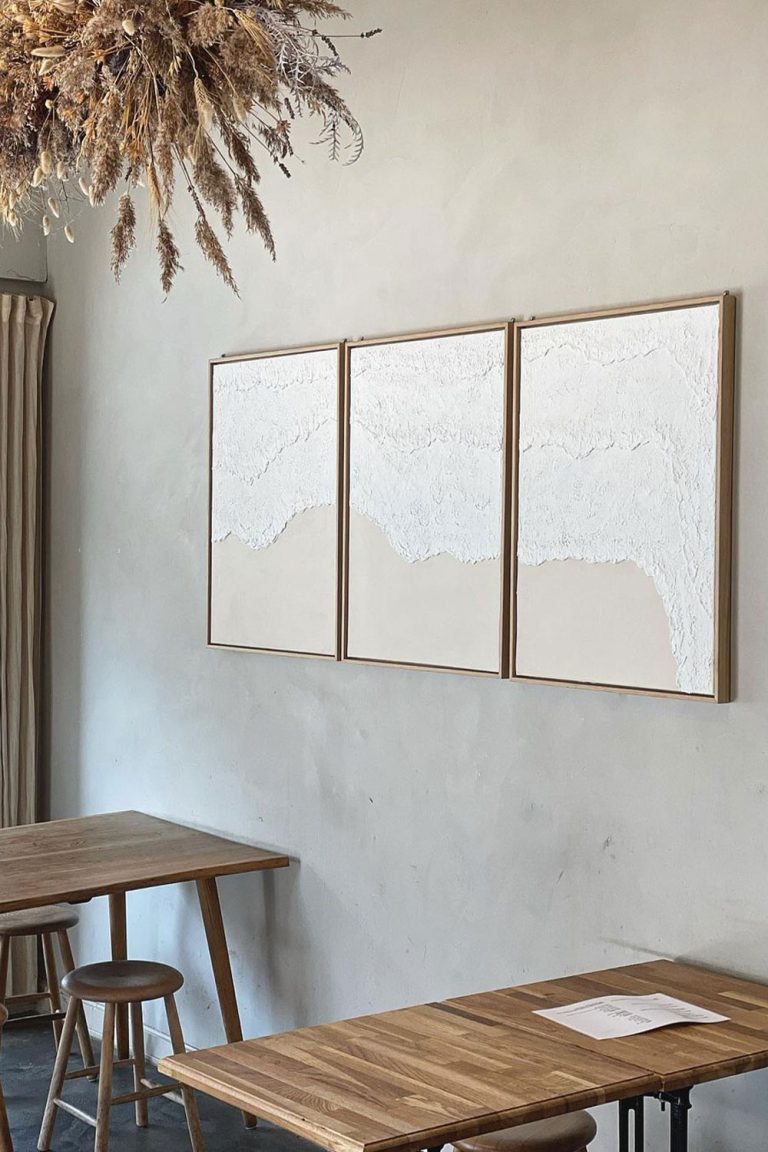
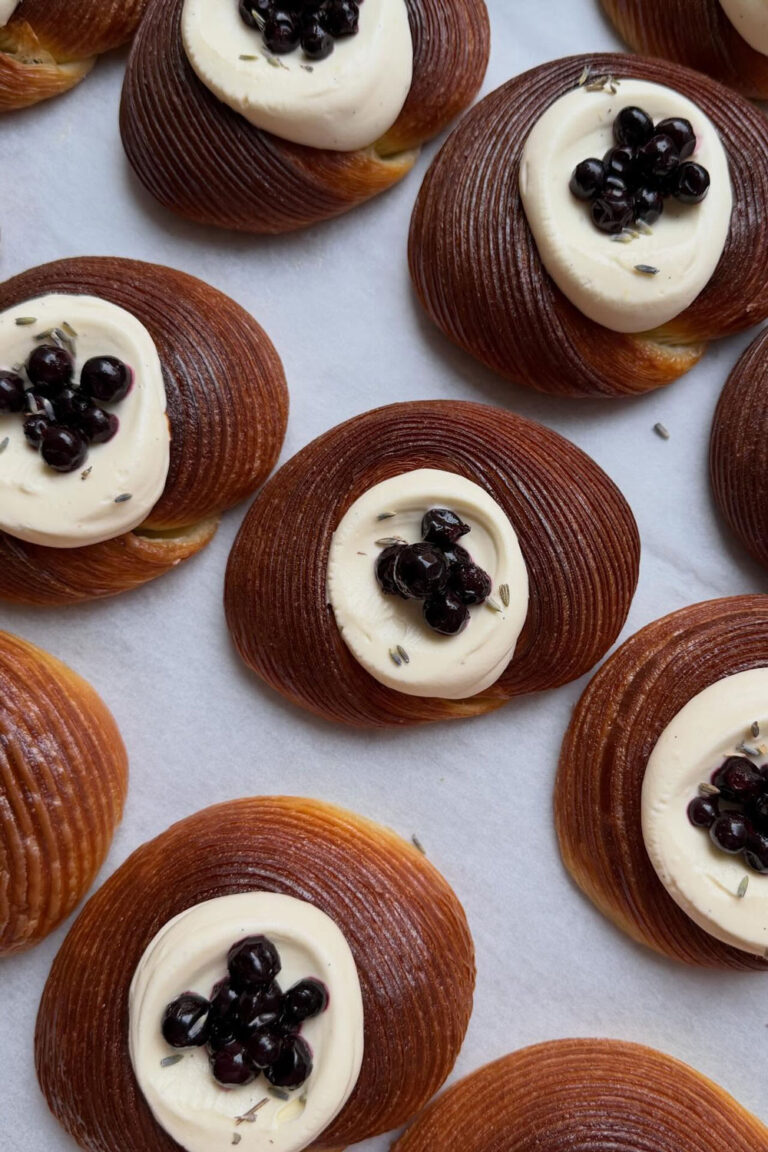
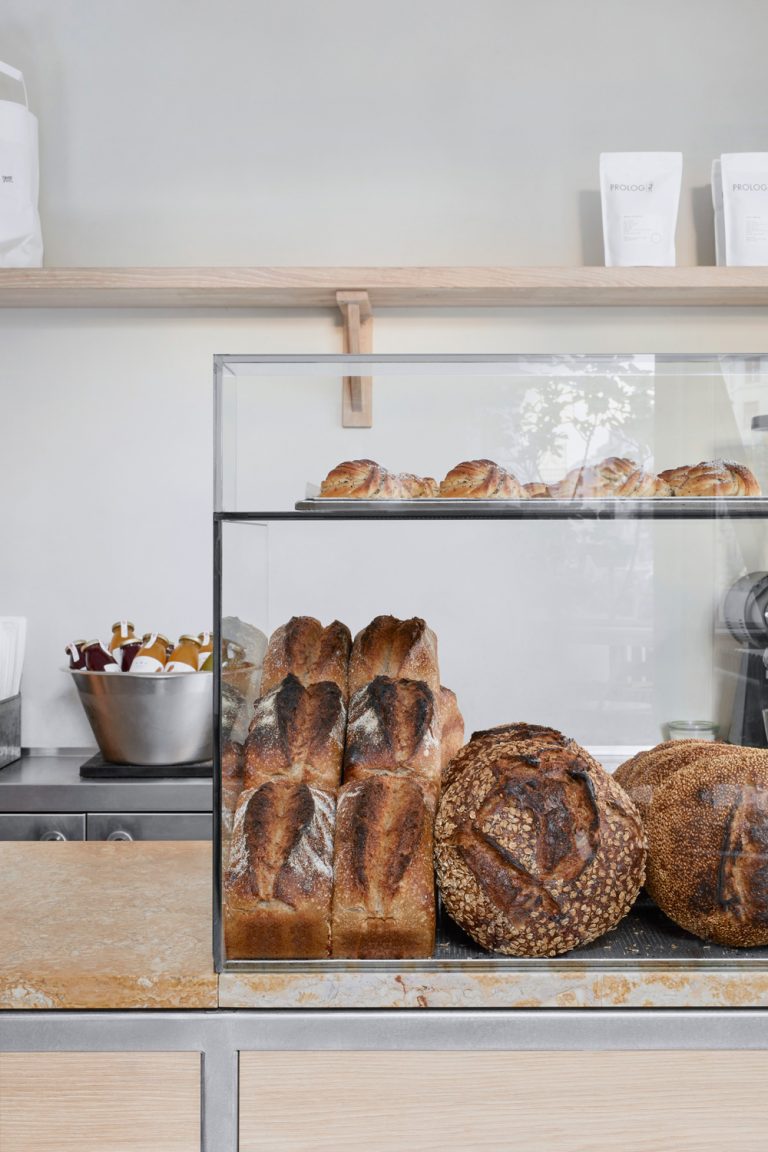
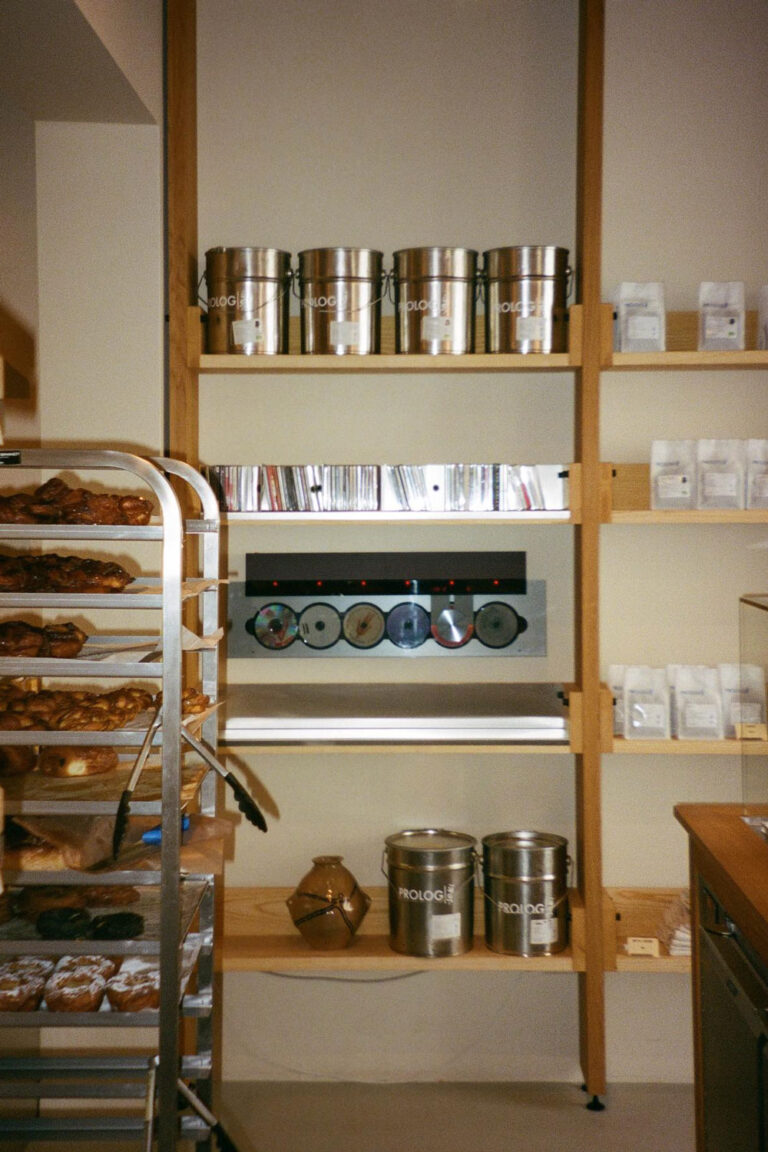
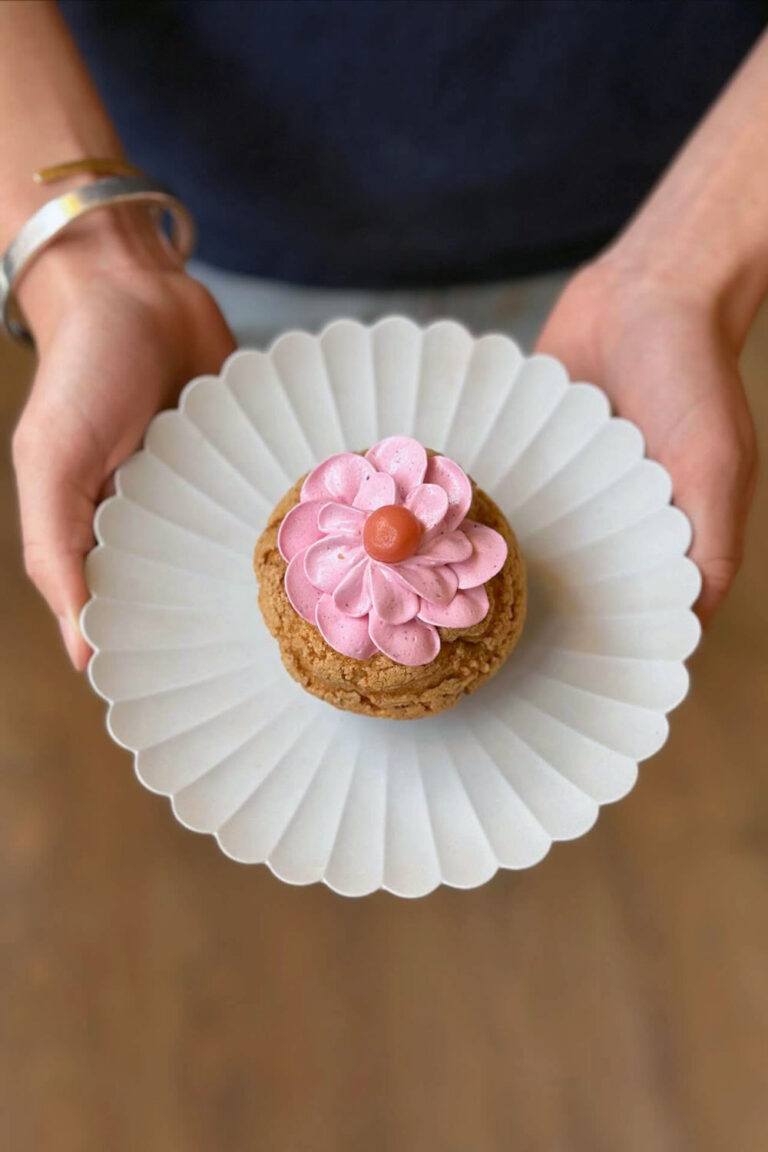
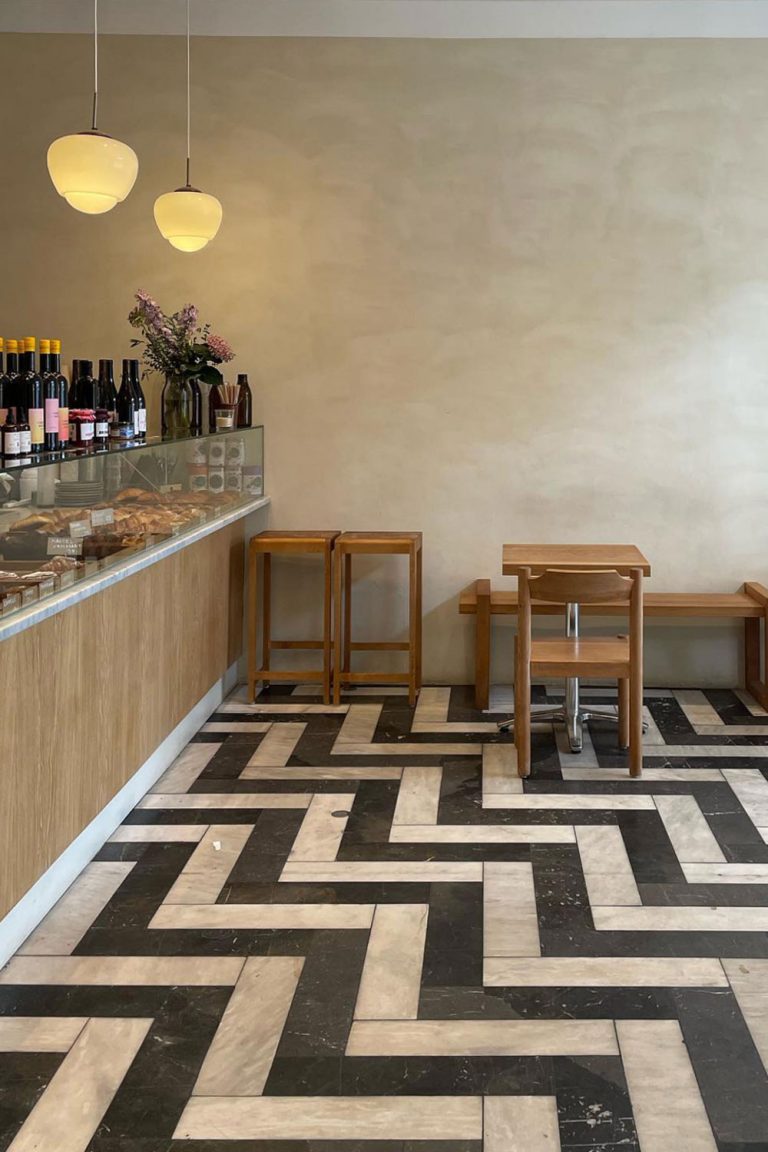
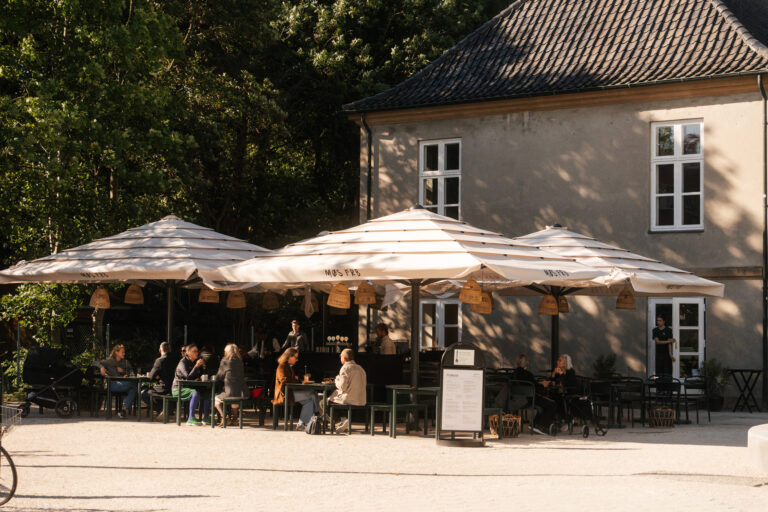
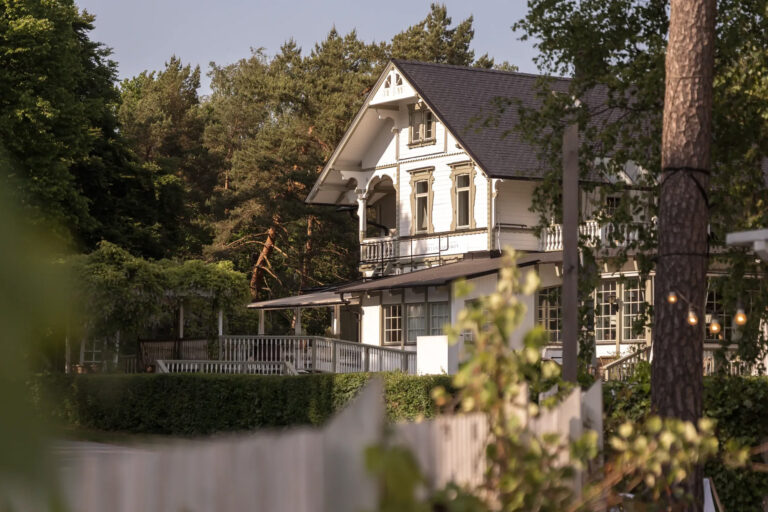
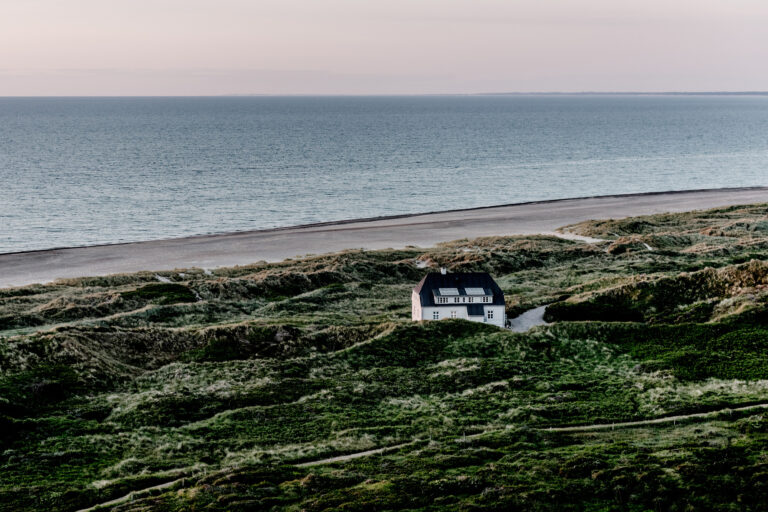
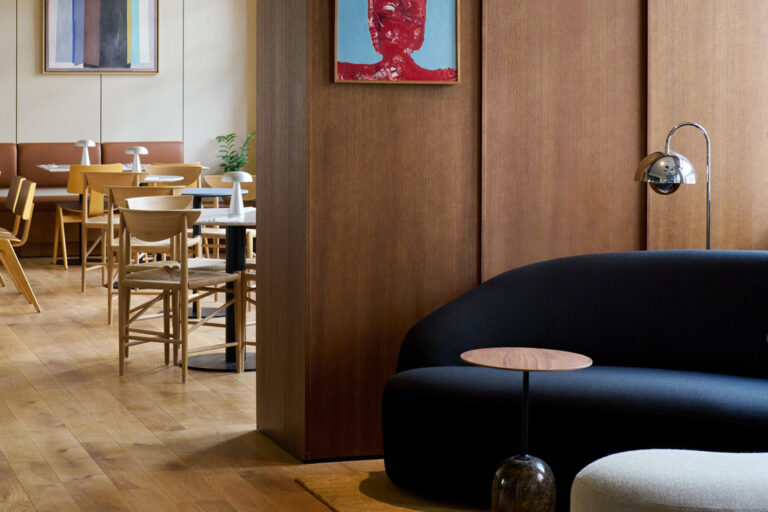
Top photography courtesy of Maison d’Angleterre
Nordic winter is long, dark and structured. When a pastry has a fixed window, people treat it like a calendar event you can taste. The urgency is the point: you either get involved or you miss it, then you wait a year and feel oddly annoyed about it. The hunt for the it-bun taps straight into that.
Shrovetide season also offers a clean loophole. You can eat something unapologetically rich on a weekday, at lunch, with coffee, in public, without turning it into a personal brand or a cheat-day monologue. Chasing the it-bun even makes indulgence feel oddly productive.
In the Nordics, a line outside a bakery reads as proof. It’s also a small social ceremony: you commit, you wait, you get rewarded. The bakery gets theatre for free, customers get a story and everyone gets a reason to message someone a photo.
These buns travel well socially. Offices and studios adopt them as a shared moment because it’s easy and seasonal without needing a full celebration. Once one person brings a box, the day becomes a soft competition about which bakery did it right and whether it’s this year’s it-bun.
Daily newspapers add fuel by publishing the yearly best-of lists. Social media does its part by rewarding whatever looks most dramatic in a square frame. The result is a short, loud race for the it-bun, with everyone acting like their choice is a matter of public interest.
A lot of people grew up with some version of the tradition. As adults, they have cash, opinions and access to better bakeries. The bun becomes a way to relive something familiar while also upgrading it, then defending the upgrade loudly.
Food arguments are safe conflict. They give people a script: strong opinions, zero consequences. You can be passionate, petty and certain for five minutes, then go back to being competent and polite. That’s why it spreads so fast every year.
Photography courtesy of Alice
The bun moment sits before Lent, not inside it. The whole point is the threshold: the last stretch of ordinary life before the calendar flips into restraint, however loosely modern people observe it.
In medieval Europe, Lent meant real fasting rules. Shrovetide was the practical response: use up butter, eggs, cream and sugar before a period when rich foods were limited. In the Nordics, the religious logic faded for many, but the timing stayed. The bun survived as a seasonal marker rather than a devotional act.
You still hear language that ties the buns to Lent, especially in Sweden and Finland, partly because the tradition is anchored to Shrove Tuesday or Fastlag and partly because it sits so close to the start line. People remember the sequence even if they ignore the fasting.
Today, it reads less like observance and more like a countdown. Bakeries stretch it into a season, media turns it into a recurring story and customers treat it as a limited-time object worth planning for. The religious background becomes trivia, while the ritual stays fully intact.
So yes, it’s a last-chance-before-Lent sugar binge with a religious backstory that still gives it shape. If Lent didn’t exist, the buns would need a new deadline.
Photography courtesy of Juno the Bakery
Because Easter moves. In the Western church calendar, Easter is set as the Sunday after the Paschal full moon, calculated as the ecclesiastical full moon on or after the fixed ecclesiastical equinox of 21 March. When Easter shifts, everything tied to Lent shifts with it.
Shrove Tuesday is always the day before Ash Wednesday and it lands 47 days before Easter Sunday. Ash Wednesday is 46 days before Easter Sunday.
Fastelavn in Denmark and Norway is pegged to Easter too: it’s celebrated on the Sunday seven weeks before Easter Sunday.
In Sweden, the peak bun day is Fettisdagen, which is Shrove Tuesday.
In Finland, the bun tradition clusters around Shrovetide as well, with the same Shrove Tuesday spine, often spilling into the surrounding days in practice because it’s treated as a short season rather than a single moment.
In Denmark, the big day is Fastelavn Sunday, seven weeks before Easter Sunday.
In Norway, it follows the same Fastelavn Sunday placement, again seven weeks before Easter Sunday.
In Iceland, the run-up is unusually tidy: Bolludagur lands on Shrove Monday, followed by Sprengidagur on Shrove Tuesday, then Öskudagur on Ash Wednesday.
Photography courtesy of Hart Bageri
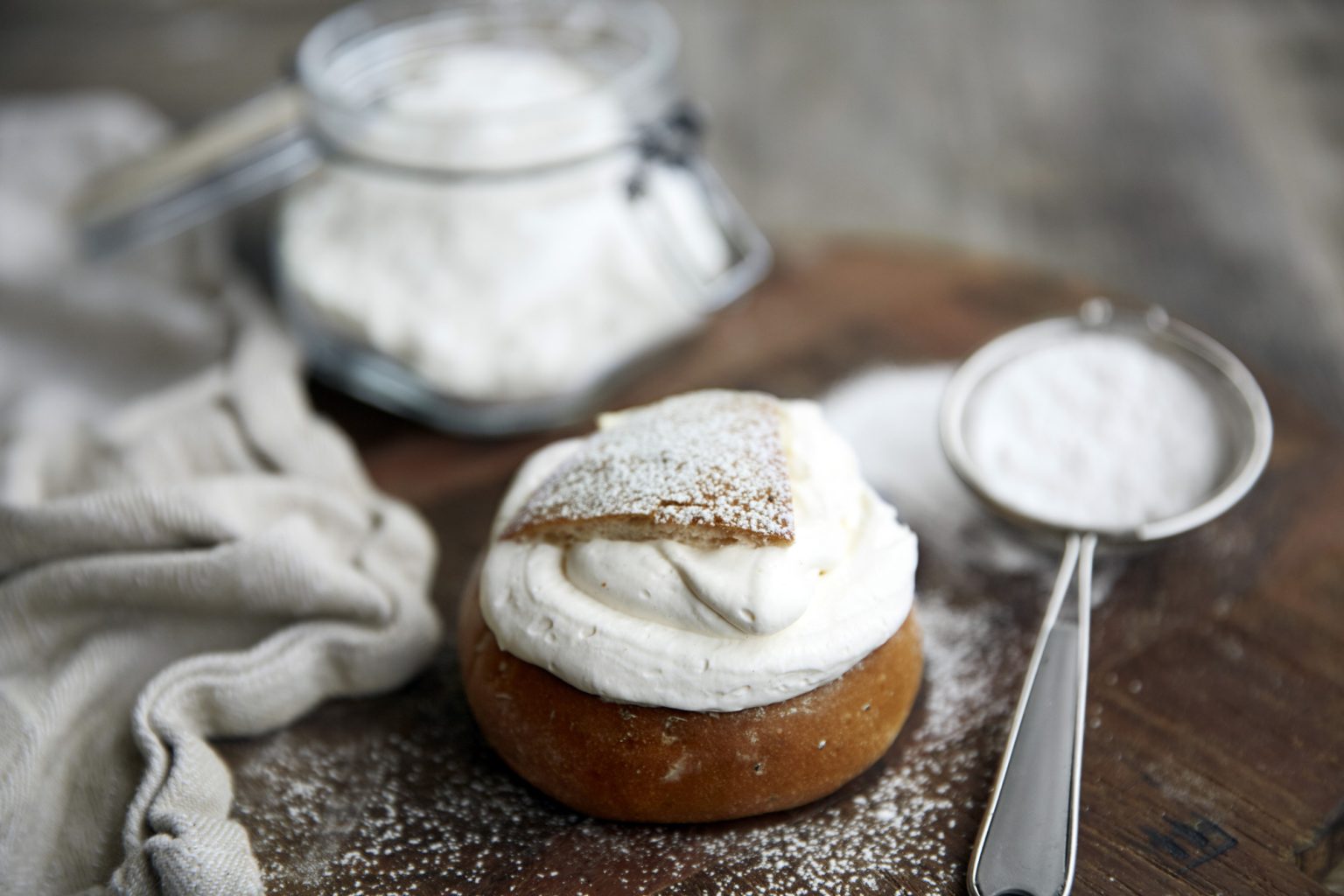
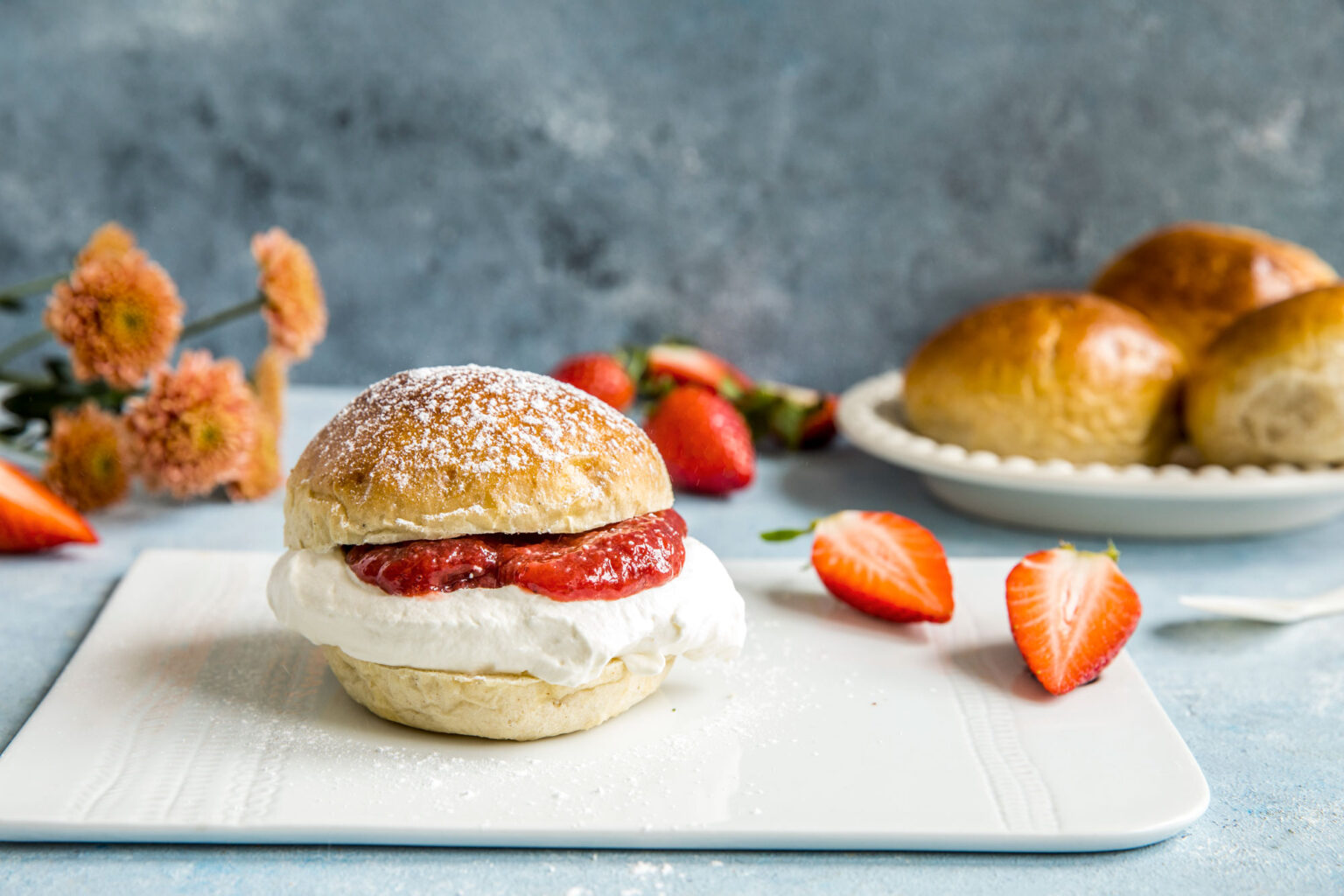
Sweden’s semla is a cardamom-scented wheat bun filled with almond paste and whipped cream, then finished with icing sugar.
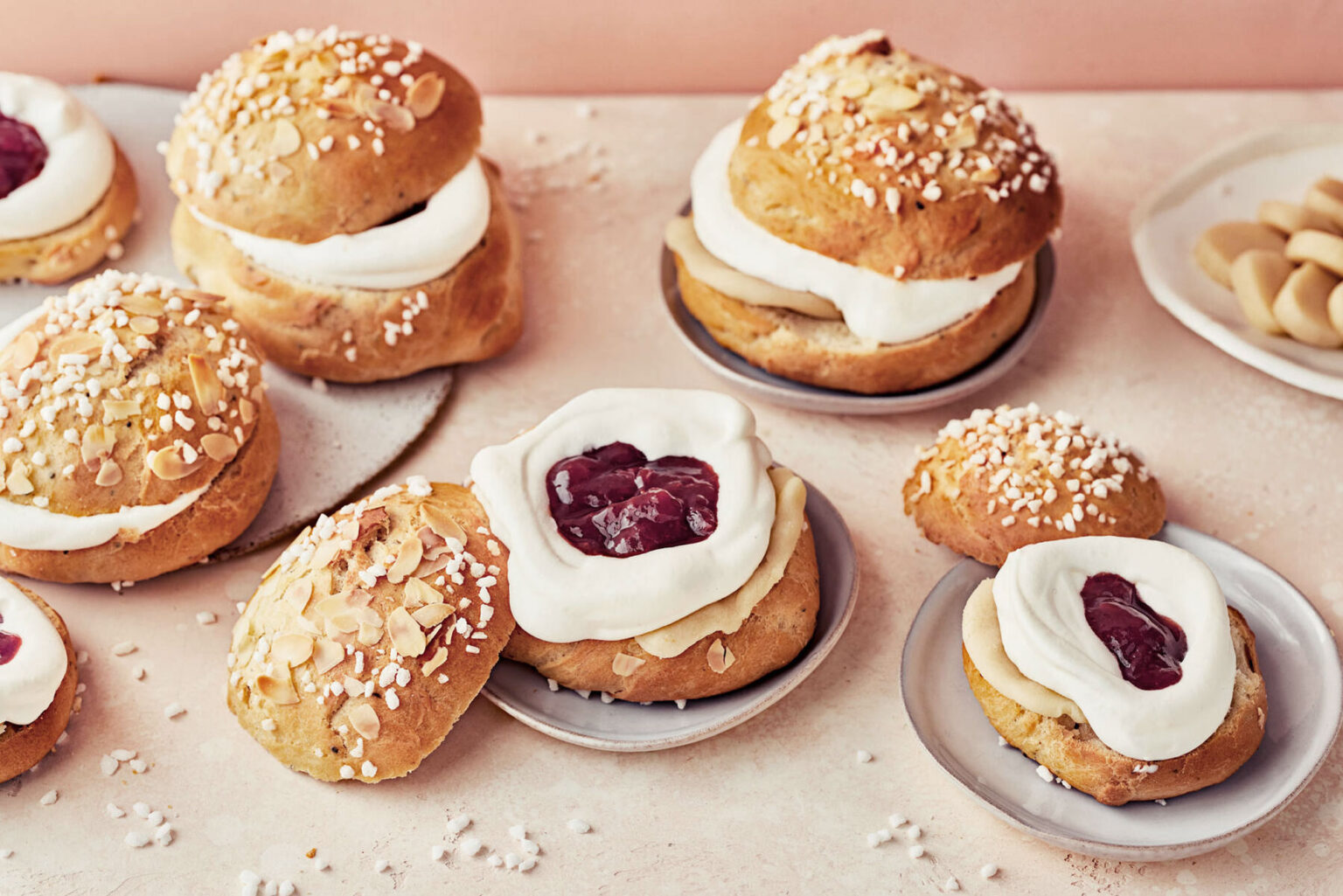
Finland’s laskiaispulla looks similar, but the national sport is choosing sides between jam or almond paste under the whipped cream.
Denmark’s fastelavnsbolle is the bakery counter’s wildcard, often a bun or puff pastry build filled with custard, cream, jam or marzipan and dressed to impress.
Norway’s fastelavnsbolle sticks to the basics: a soft sweet bun with whipped cream, often with jam, then a simple dusting of sugar.
Iceland’s bollur leans into drama, usually a cream bun with jam and whipped cream topped with a chocolate glaze.
Photography courtesy of Riviera
In Sweden, it’s the semla (plural semlor), a soft wheat bun usually scented with cardamom, filled with mandelmassa (almond paste that sits somewhere between nutty and marzipan-sweet) and a generous crown of whipped cream, then finished with a dusting of icing sugar.
The semla is tied to Fettisdagen (Shrove Tuesday), the last proper feast day before Lent began. Earlier versions were simpler and more restrained: a plain bun, sometimes served soaked in warm milk. Over time, Sweden relaxed the strict fasting mindset, then promptly improved the situation by adding almond paste and cream, which is the sort of cultural evolution you can support without reading the footnotes.
It tastes like winter comfort dressed for a bakery counter: warm spice from cardamom, sweet almond richness, cold cream and a soft bun that collapses a little once you commit. Done well, it’s balanced rather than cloying, with the almond paste providing depth and a slight bitterness that keeps the whole thing from turning into pure sugar fog.
In practice, you’ll see semlor everywhere once the season starts: independent bakeries, neighbourhood cafés, office meeting tables and supermarkets that sell them by the box for people who refuse to queue. The best ones are usually at proper bakeries where the bun is fresh, the cardamom is present, the almond paste tastes like almonds and the cream hasn’t been whipped into lifeless foam.
If you want the old-school serving, ask for hetvägg: the semla in a bowl of warm milk. It’s less photogenic and more comforting, the kind of thing you eat slowly and then wonder why anyone thought winter needed more hobbies than this.
One local curveball: in parts of southern Sweden you’ll hear fastlagsbulle used, and the language can shift depending on region. The safest move is simple: say semla, point at the pastry and let the bun do the talking.
Read the article on Sweden’s semla (and how to make it).
Photography courtesy of Magnus Carlsson and Image Bank Sweden
In Finland, it’s the laskiaispulla (plural laskiaispullat), a sweet wheat bun that usually carries a hint of cardamom, split and filled with whipped cream plus either almond paste or raspberry or strawberry jam, then finished with a dusting of icing sugar.
It’s tied to Laskiainen, Finland’s Shrovetide season around the run-up to Lent. The day has old church-calendar roots, but modern Finland treats it as a winter ritual you can actually enjoy: sledding, crisp air, then something warm and filling followed by a bun that’s basically a reward for surviving the season. If Sweden’s semla conversation is about “the right” version, Finland’s version comes with a built-in argument: jam people and almond paste people will both claim they’re defending tradition.
The taste depends on which camp you pick. Almond paste brings a deep, nutty sweetness that can feel almost toasty and grown-up under the cream. Jam turns it brighter and sharper, cutting through the richness with fruit and a bit of tang. Either way, the bun should be soft and lightly spiced, the cream should taste like dairy rather than sugar and the whole thing should feel indulgent without becoming a chore.
In Finland, the fun detail is how quickly the bun escapes the bakery context. You’ll spot laskiaispullat at office coffee tables, in university cafés, at petrol stations on winter road trips and in supermarket stacks that make it feel like an official national supply chain. If you’re hunting for a proper one, look for a bun that’s baked that day with a light cardamom note, then filled to order so the cream stays airy and the base doesn’t turn soggy. The giveaway is structure: it should hold its shape in the hand, even once the filling starts fighting back.
A small language note that’s useful when you travel: in Swedish-speaking Finland you’ll often see the Swedish name fastlagsbulle used for the same tradition. If you remember one word, remember laskiaispulla, then follow the scent of cardamom and the line of people pretending they’re only buying one.
Photography courtesy of Valio
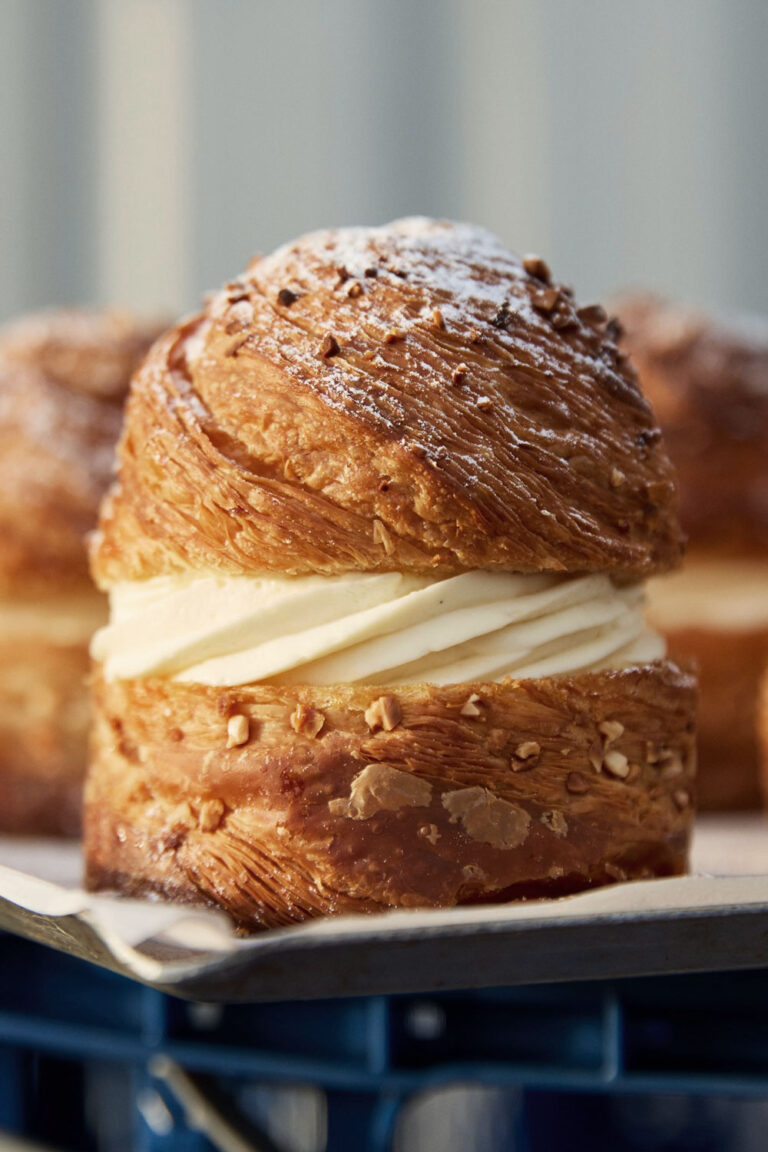
In Denmark, it’s the fastelavnsbolle (plural fastelavnsboller), the pastry that turns up around Fastelavn, the pre-Lent carnival season. Unlike Sweden and Finland, where the bun has a fairly fixed identity, Denmark treats the name as a category. One bakery’s fastelavnsbolle is a soft yeasted bun with custard. Another’s is laminated puff pastry piled with cream, icing and whatever will make people stop and stare.
Fastelavn has church-calendar roots, but the modern vibe is playful and public, driven by families, costumes and a sense that winter needs an excuse for sugar. The bun follows that logic. Danish bakeries lean into variation as the point, then compete in plain sight, week by week.
The taste can swing from simple to ridiculous. The bun-style versions are soft, lightly sweet and built around a creamy centre. The puff pastry versions go for crisp layers, richer fillings and a finish that is deliberately showy, built to look good in a bakery window and even better in a photo.
This is where the it-bun chase goes loud. Bakeries drop new versions through the season, lists and guides stoke the hunt and people talk about fillings like they’re discussing politics. Denmark turns it into a spectacle.
Photography courtesy of Leckerbær and Hart Bageri
In Norway, it’s the fastelavnsbolle (plural fastelavnsboller), a soft sweet wheat bun sliced open and filled with whipped cream, often with jam, then finished with icing sugar. It shows up around Fastelavn, the pre-Lent weekend, but the Norwegian version keeps things low-key.
Compared with Denmark’s showier versions, Norway leans into comfort and restraint. The bun is meant to be eaten, not staged, which is why the best ones focus on basics: a fresh, airy bun, cream that tastes like dairy rather than sugar and a jam that reads as berries, not red syrup.
You’ll find them in bakeries and cafés as Fastelavn approaches, plus supermarket versions for anyone who wants the tradition without making a project of it. The local debate still exists, it’s just more specific: bun texture, cream quality, jam or no jam and whether the whole thing feels baked today or packed last week.
This is the Shrovetide bun as quiet competence. It arrives, gets eaten, disappears again, and the country moves on, until the next winter when everyone suddenly remembers they have strong opinions.
Photography courtesy of Visit Norway
In Iceland, it’s bollur (singular bolla), cream buns eaten for Bolludagur, which lands on the Monday before Ash Wednesday. The classic version is a sweet bun filled with whipped cream, often with jam, then topped with a glossy chocolate glaze.
Iceland keeps the run-up to Lent unusually orderly. Bolludagur is followed by Sprengidagur on Tuesday and Öskudagur (Ash Wednesday) on Wednesday, which gives the whole week a clear rhythm that people actually follow. The bun isn’t just seasonal, it’s attached to a named day, so the country buys in.
You’ll see bollur everywhere in the lead-up, from bakeries to supermarket shelves, but the cultural centre of gravity is still the bakery box on someone’s table, opened with the seriousness of a small ceremony. The taste is straight-up comfort with a party hat: soft bun, cold cream, sweet jam if it’s there, then the bitter-sweet snap of chocolate on top.
This is Shrovetide with a schedule. Iceland turns the pre-Lent stretch into a neat sequence you can follow without overthinking it, and bollur is the opening act, sweet, slightly excessive, gone before anyone has time to get bored.
“Traditional” here usually means two things at once: the calendar timing and the recognisable structure. The timing is the easiest bit. These buns belong to the run-up to Lent, so anything sold outside that window starts to feel like a marketing extension, even if people still buy it. The structure is the real battleground, because each country has a baseline people carry in their heads, then defend like it’s an inheritance.
In Sweden, traditional semla means a cardamom bun, almond paste, whipped cream and a simple finish. In Finland, tradition splits, but it still expects the same bun-and-cream format, with either almond paste or jam as the core decision. In Norway, a fastelavnsbolle is meant to be plain and soft with cream, often jam, and very little decoration. Denmark’s baseline is looser, but it still expects “fastelavnsbolle season” and a filled pastry or bun that sits in that moment. Iceland’s bollur tradition is tied tightly to Bolludagur and the classic jam, cream and chocolate-glaze profile.
Across all of them, “traditional” also carries a quiet quality expectation. Fresh bun, dairy-forward cream, a filling that tastes like what it claims to be. If any of those go missing, people call it wrong, even if the ingredients technically match.
Bakery freestyle begins when the bun becomes a platform. The core idea remains, but the build starts chasing novelty. Fillings shift into salted caramel, citrus curds, espresso creams, pistachio pastes and hybrid flavours pulled from other desserts. Toppings become maximal: glazes, brûléed caps, piping, shards, sprinkles and dusts that signal the bakery’s identity more than the tradition.
Shape is another tell. Once you get choux-like builds, laminated viennoiserie architectures, oversized portions or anything that needs a fork by design, you’re in freestyle territory, even if the bakery keeps the old name on the label.
Denmark is where “traditional” is least policed because the culture has long treated fastelavnsboller as a seasonal category rather than a fixed recipe. That makes Denmark the easiest place for bakeries to experiment without being accused of cultural vandalism. It also makes the it-bun chase louder, because novelty has more space to win.
Freestyle is forgiven when it still tastes right. People complain about innovation in public, then buy it anyway if the bun is tender, the cream is fresh and the filling has restraint. What gets rejected is gimmick: flavours that read as attention tactics, sweetness without balance, textures that collapse, or a bun that feels like an afterthought under a pile of decoration.
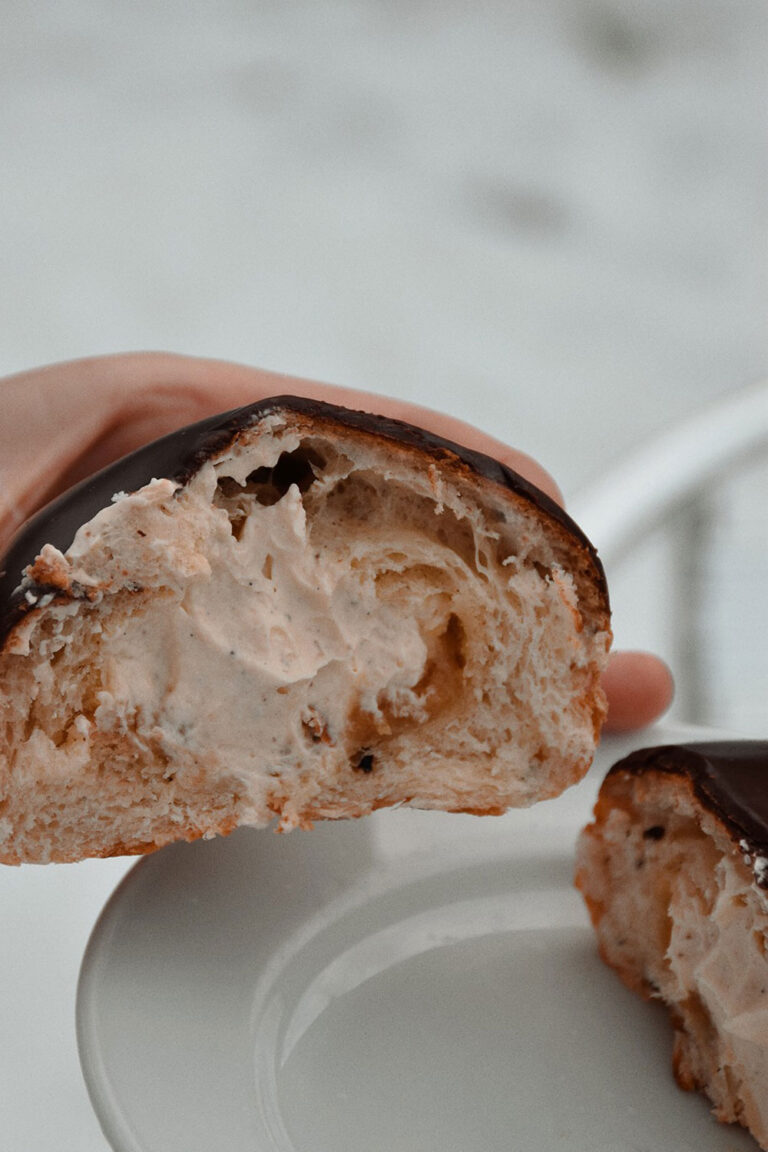
The tradition comes from the pre-Lent calendar in medieval Christianity. Shrovetide was the last stretch before fasting, so people used up rich ingredients like butter, eggs, cream and white flour. A sweet bun made perfect sense in a cold climate with hard seasons and clear rituals.
If you’re asking who got there first in the Nordics, Denmark has the earliest commonly cited trace: fastelavnsboller depicted in a Danish church painting dated to around 1250. That does not prove nobody else ate something similar, but it’s the earliest concrete breadcrumb that’s easy to point to.
What happens next is less about invention and more about local editing. The same pre-Lent idea spreads, sticks, then evolves in slightly different directions as each country’s baking culture and ingredients take over.
Each country has its own take as traditions don’t travel as one neat package. They move through trade, migration and church calendars, then get rewritten by local bakeries, local ingredients and whatever people grew up calling “the right one”.
Once a version becomes the default at home, it sticks. Bakeries reinforce it because consistency sells, while seasonal novelty sells too, depending on the market. Over time, those incentives harden into culture: some places reward variation, others reward familiarity.
Language helps lock it in. Separate names and feast-day labels create separate mental boxes, so people stop thinking of it as one shared Shrovetide idea and start treating it as a national possession.

Iceland’s version is the outlier because the modern custom is widely described as arriving later via Danish and Norwegian bakers in the 19th century. Iceland then attaches it to a very clean three-day run-up to Ash Wednesday, with Bolludagur as the bun day, which gives the whole thing a tighter rhythm than the rest of the region.
Photography courtesy of Skipper Bageri
Vegan Shrovetide buns have gone from “special request” to “yeah, we’ve got that”. In most Nordic cities, any bakery that wants to be taken seriously in winter has a plant-based option, usually by swapping the dairy cream for an oat-based whip and keeping the rest close enough that nobody feels punished. You’ll often see them sell out early for the same reason as the regular ones: people want in on the ritual, not a lecture.

Gluten-free is still the ask that changes the mood. These buns are built on soft, enriched wheat dough, so removing gluten is like pulling the scaffolding out of a building and hoping it stands. Some places nail it, but availability is patchier, batches are smaller and you’re more likely to hear words like limited, pre-order and we only have two left. Outside major cities, it can slide from “seasonal treat” to “logistics exercise”.
Share this
Sign up for the latest hotspot news from the Nordics.
Automated page speed optimizations for fast site performance