Discover what’s new before everyone else:
Get our free on-the-go Nordic hotspot map!
The Nordics • Insider guides • Trend watch: how Nordic brands let you stay before you buy
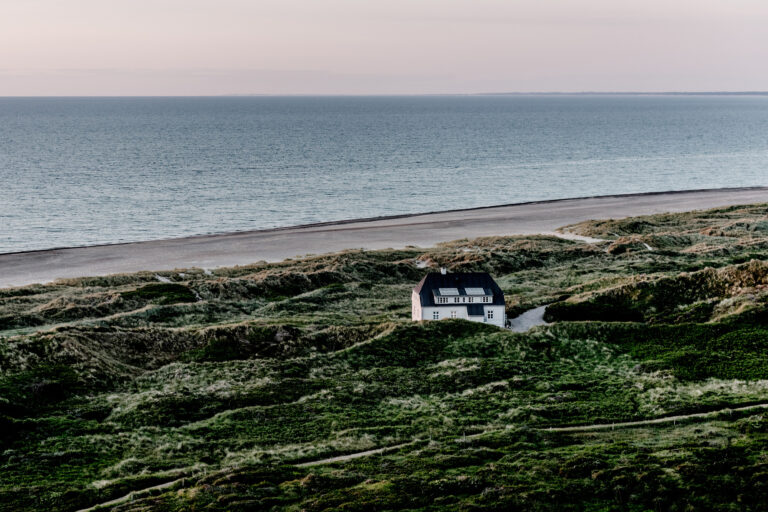
Top photography courtesy of Sommarnöjen
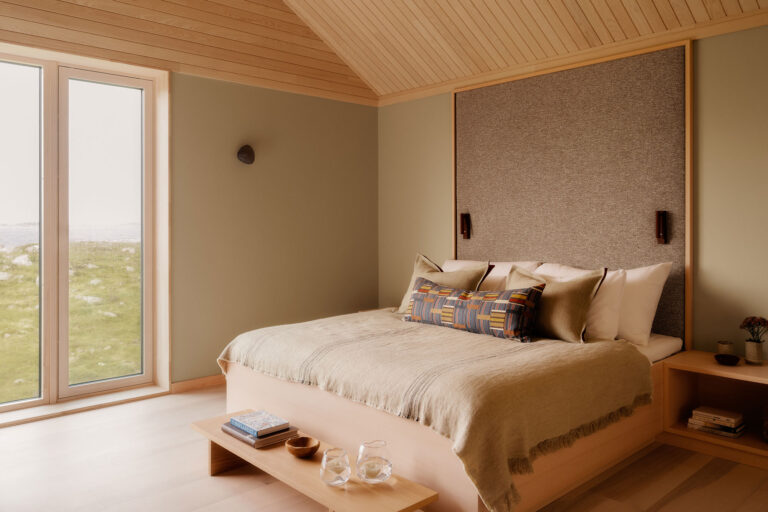
Dawn in a small Nordic cabin. Steam lifts from the kettle as the sliding glass opens a fraction to the cold. The fire takes, a door moves on its track with weight, morning light travels across the floor and then slips away. None of this shows up in a showroom, a catalogue or an e-store. You learn it by living with the design.
Stay before you buy is a live-in trial for high-consideration design. Instead of a quick demo you spend real time using the product in an ordinary setting. Brands do this through formats consumers will recognise in the Nordics: bookable brand guesthouses, hotel tie-ins where rooms double as proof of concept and live-in showrooms set up as working homes. The aim is simple – reduce guesswork, surface how things behave over a day and night and build trust through use rather than claims. Pack a paperback and a pair of wool socks – if both feel at home, you probably will too.
“A holiday house is built for life,” says Malin Kadestam, PR manager of Sommarnöjen, a Swedish brand specialising in prefabricated holiday houses and cabins. “For some who have only seen our houses in pictures it can be hard to understand what you are paying for. Material choices and the feel of a room are difficult to convey in images.” The idea of offering a stay arrived “when we built our first show house in Roslagen” as a way to let people slow down and decide well.
Place comes first. “We put great weight on buying a rural, beautiful plot,” then the house is furnished “as a real holiday house with everything you need to live in the countryside.” The brief is practical. “Cook in the kitchen, light a fire, open and close doors, let the children build a den in the loft. These houses are for living in, not just visiting.”
Photography courtesy of Sommarnöjen
Nordic shoppers do their homework online, then want proof in real life. A stay turns research into experience.
Online buying is now the norm. In 2024, 77% of EU internet users purchased online in the previous 12 months. In the Nordics, 82% had shopped online in the past 30 days, showing how entrenched the habit is. At European scale, B2C e-commerce turnover reached €887 billion in 2023, which means even small frictions matter. Retailers are also testing modest return fees in some markets, which pushes better pre-purchase verification rather than costly post-purchase logistics.
The cultural fit helps. Nordic design values everyday use over display, while climate and light expose comfort fast – heat after dusk, glazing in wind, flow on winter mornings. As Kadestam puts it: “Today’s buying patterns mix digital and physical, and as consumers we often want something authentic whether online or offline … By letting potential customers stay, we give them a sense of what life in the countryside could be like and the conditions to make a wise choice.”
The old retail model ships an object to your door for a returns window. It answers single-item questions – fit, finish, colour. Stay before you buy flips the context. You step into a complete setup and use pieces together as intended. You cook, sit, sleep and store. You notice how light tracks across a room, how a door’s weight changes how you move, how storage behaves when full. Call it the trust upgrade: less packaging on the doorstep, more time in a room that has to earn its keep.
Photography courtesy of The Darling
Aside from Sommarnöjen, which Nordic brands let customers live with the design before they decide?
Family-run since 1939 when metalsmith Holger Nielsen made the first pedal bin, Vipp now operates a growing network of bookable guesthouses where everything is Vipp and meant to be used. The hospitality push is led by third-generation CEO Kasper Egelund and treats each stay as proof of concept in real life.
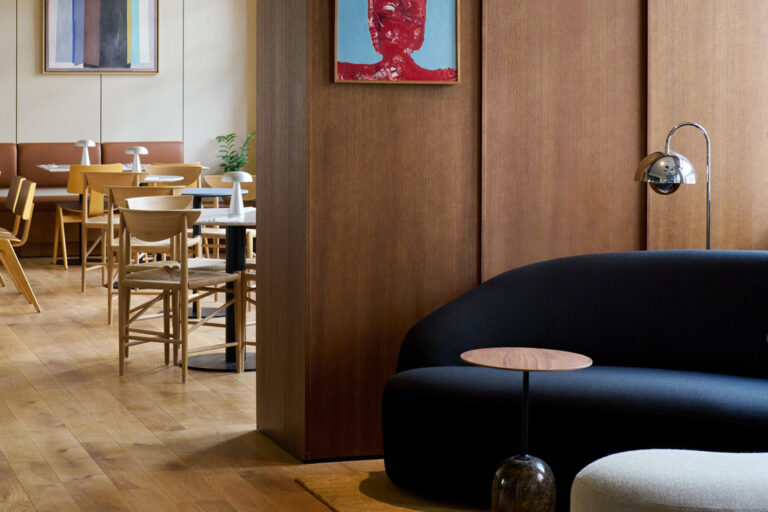
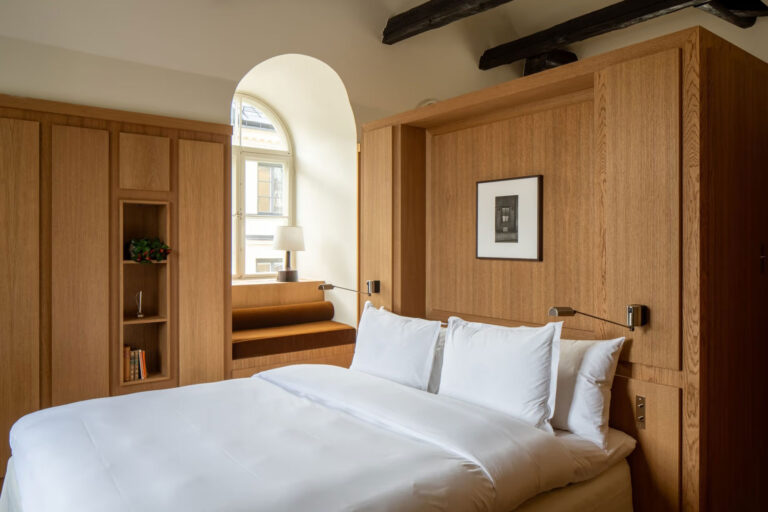
Born from the uniting of Menu, The Audo and by Lassen, Audo Copenhagen is a hybrid of boutique hotel, showroom, restaurant and café. Designed with Norm Architects, the address lets guests move from an overnight stay straight into the brand’s spaces to see and order the pieces they lived with.
Curator Tina Seidenfaden Busck, who founded The Apartment with Pernille Hornhaver, has reopened the Christianshavn space as a bookable two-bedroom residence. The rooms are styled at gallery level and every detail can be discussed with the team if you want to take something home.
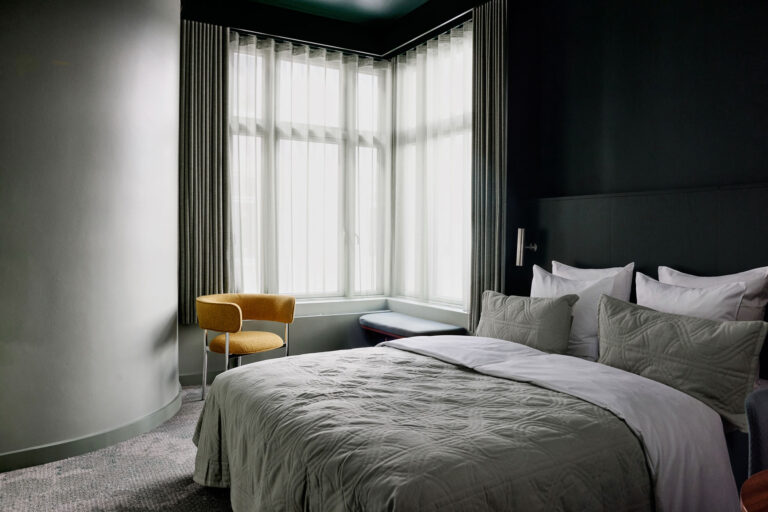
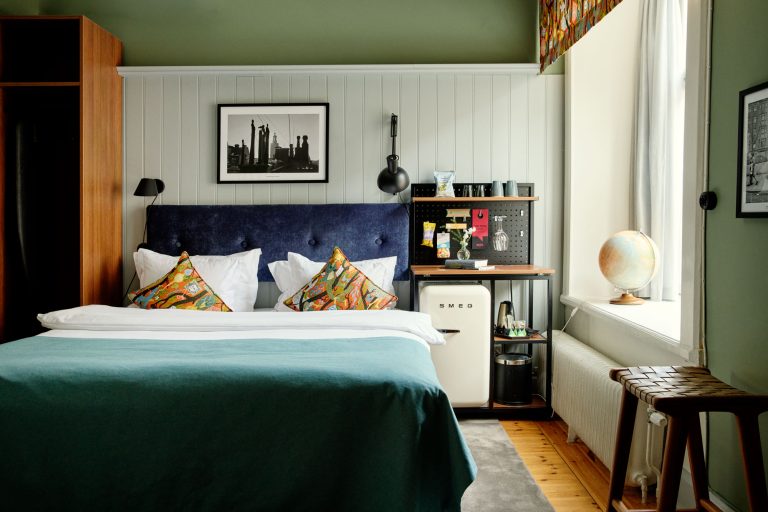
Fashion and branding duo Uffe Buchard and Jens Løkke created The Darling as a single-apartment guesthouse in central Copenhagen. The set-up is simple – stay among contemporary Danish art and design, then buy the pieces you cannot leave without.
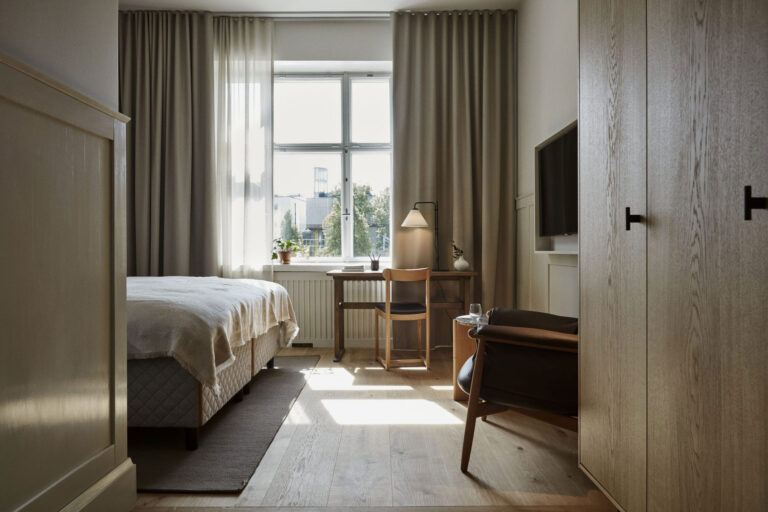
Grandpa, founded in 2003 by Martin Sundberg, Anders Johansson and Jonas Pelz, has dressed a tiny suite above Järvsö Crêperie. You sleep in their look, then take cues back to Grandpa’s edit – a small, playful way to trial a retailer’s world overnight.
In Älmhult, IKEA’s only hotel extends a lineage that began with Motell IKEA, opened by Ingvar Kamprad on 22 August 1964. IKEA Hotell’s rooms and shared spaces are furnished with IKEA to feel like everyday life, which makes it a mass-market expression of stay-first retail.
Photography courtesy of Vipp
Connection. A day and a night let you fall into step with a design – the light it keeps, the sounds it carries, the way warmth holds after dusk. A showroom asks for a glance. A stay asks you to slow down. That is experiential retail at its best, it forms a bon, a relationship with the product.
Live-in trials turn brands from shopkeepers into hosts. You make coffee, read after dark and wake with first light. Routine becomes the test. Kadestam: “the sliding glass walls are something you almost need to live with to grasp how they blur the line between outside and in.” Guests also praise “sliding doors for their weight and fine detailing,” and built-ins that make compact plans feel more generous in use than on paper. The point is not a feature list – it is the feeling that arrives once you have lived with it.
By nightfall, if you have found the seat you return to and the switch you reach for without thinking, the design has started to belong. That is the signal a showroom cannot send.
Photography courtesy of Grandpa Grand Suites
The most convincing versions of stay-first retail feel like hosted reality. They read as everyday life put on record rather than a scene set for a camera. Across the Nordics the credible examples share a few traits: context that explains the product before a word is said, full functionality so routines unfold without coaching, and hosting that sets a pace then steps back. The effect is simple. Time becomes the proof.
Place does a lot of the work. Daylight and weather move quickly here, which is why a real site reveals more than a studio. When the surroundings make sense, the product does too.
Function matters just as much. A stay is persuasive when you can cook, stow things, close a door after midnight and find the switch you want without thinking. It tests the whole system – hardware, storage, ventilation, surfaces – not a single hero object.
Credibility also lives in the tone. The best hosts offer cues about what to notice across morning, noon and night, then let guests draw their own conclusions.
Sommarnöjen’s trial houses are built to feel honest, not staged. “We put great weight on buying a rural, beautiful plot,” says Kadestam, then the team furnishes the house “as a real holiday house with everything you need to live in the countryside.” The brief is deliberately ordinary. “Cook in the kitchen, light a fire, open and close doors, let the children build a den in the loft. These houses are for living in, not just visiting.”
They are clear about adjacent paths too: some owners rent via Airbnb or Landfolk, which brings “an ‘authentic’ feeling in a different way” because “you come home to a house with a private person’s imprint.” Together those threads confirm the thesis.
Credibility comes from context, use and time – the quiet things that decide whether design will belong in your life. If the light you reach for at 3 a.m. is exactly where you expect, someone got it right.
Photography courtesy of Sommarnöjen
Share this
Sign up for the latest hotspot news from the Nordics.