Discover what’s new before everyone else:

Get our free on-the-go Nordic hotspot map!

The Nordics

Aurora hunting: guaranteed Northern Lights in the Nordics

The Northern Lights are one of the Arctic’s great natural spectacles, but seeing them takes planning. Darkness, clear skies and location matter as much as solar activity. Choose a destination near the auroral oval, stay several nights and keep plans flexible. Here’s how to maximise your chances across the Nordics.

Table of Contents
Aurora Borealis Northern Lights

What are the Northern Lights, and when can I see them in the Nordics?

The Northern Lights, or Aurora Borealis, occur when charged particles carried by the solar wind interact with Earth’s magnetic field and upper atmosphere, causing oxygen and nitrogen to emit light. Green is the most common colour, while red, blue and violet can also appear depending on altitude and atmospheric conditions. Auroras occur throughout the year, but you need sufficiently dark and clear skies to see them. Across the main Nordic aurora destinations, the practical viewing season generally runs from late August or early September to early April.

Aurora activity is statistically somewhat higher during spring and autumn, particularly around the equinoxes. September and October, then February and March, can therefore be particularly good periods to travel. That does not make any individual night predictable: cloud cover, darkness and local conditions still determine whether you actually see anything.

Aurora Borealis Northern Lights

How does solar activity affect the Northern Lights?

The sun moves through a cycle of roughly 11 years, shifting between periods of lower and higher magnetic activity. Around solar maximum, increased solar activity can produce more geomagnetic storms, sometimes making auroras stronger or pushing the auroral oval farther south than usual.

But the solar cycle is only part of the equation. Northern Lights occur throughout the cycle, particularly at high northern latitudes, and solar maximum cannot guarantee a display on any particular night. For travellers already within the auroral zone, darkness, cloud cover and local weather are often more useful factors to plan around than where the Sun happens to be in its 11-year cycle.

Aurora Borealis Northern Lights

Where in the Nordics should I go to maximize my chances?

Norway
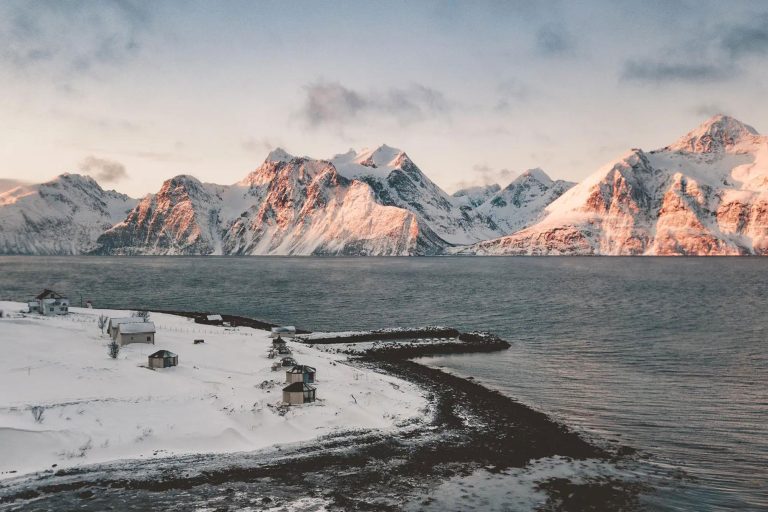
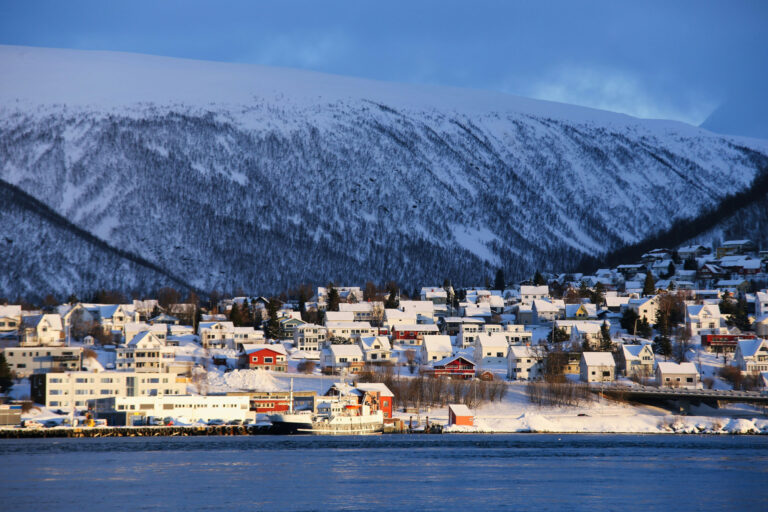
Northern Norway is one of the world’s strongest aurora destinations. Tromsø is the easiest gateway, with plenty of tours able to drive away from cloud and city light, while Alta and Kirkenes offer alternatives farther east. Senja, Vesterålen and the Lofoten archipelago combine dark skies with mountains, fjords and fishing villages. Svalbard is a special case: during the polar night, auroras can appear even during the daytime hours. The archipelago sits slightly north of the main auroral oval, however, so its extreme darkness does not necessarily mean better odds than mainland northern Norway.
Sweden
Swedish Lapland sits beneath the auroral oval, with Kiruna as its main transport hub. Abisko has become particularly well known for its local “blue hole” weather phenomenon, which can leave clear sky above the area even when surrounding mountains are cloudy. STF Aurora Sky Station, reached by cable car from Abisko, is purpose-built for night-time viewing. Farther south and east, the areas around Jokkmokk and Gällivare offer wilderness lodges, open landscapes and relatively little artificial light.
Finland
Finnish Lapland is another hotspot, with auroras visible on about 200 nights each year. Rovaniemi on the Arctic Circle is the most accessible, while further north places like Saariselkä, Inari and Levi offer glass igloos and cabins designed for aurora-watching from your bed. Around Muonio and Kilpisjärvi, you’ll find wild landscapes with minimal light pollution.
Iceland
Iceland sits mostly just south of the Arctic Circle, but Northern Lights can be seen across the country when conditions are right. They can even appear over Reykjavík, although city lighting makes faint displays harder to see. For darker skies, head towards places such as Grótta on the edge of the capital or farther into the countryside around Þingvellir, the Snæfellsnes Peninsula and the South Coast. Iceland’s advantage is not extreme latitude but easy access to open landscapes with very little artificial light.
Greenland
Greenland is one of the least-visited aurora destinations, but it’s spectacular if you make the journey. Kangerlussuaq, Ilulissat and Sisimiut offer strong activity with almost no artificial light. The season here stretches long thanks to the extended Arctic nights.
Aurora Borealis Northern Lights

How can I improve my odds of seeing the auroras?

Choose dark skies
Get away from artificial light whenever possible. A new moon can make faint auroras easier to distinguish, but moonlight does not prevent a strong display from being visible. Cloud cover and darkness matter more. Aurora activity is often strongest around local midnight, roughly a couple of hours either side, although the lights can appear at any time when the sky is sufficiently dark.
Check the weather and clouds
Clear skies are essential. If it’s cloudy, you might see nothing, even during a strong solar storm. Many guided tours will reschedule or offer a next-night retry if clouds move in.
Use aurora forecasts and alerts
Check both weather and space-weather forecasts, but start with the clouds. An excellent geomagnetic forecast is of little use beneath an overcast sky. Aurora forecasts and the KP index can help indicate the level of geomagnetic activity, but they are not guarantees of what you will see from a particular location. Local cloud forecasts, current observations and alerts from hotels or guides can be just as useful on the night.
Stay multiple nights
Give yourself several nights rather than treating the aurora as a one-evening excursion. In much of Finnish Lapland, the Finnish Meteorological Institute estimates the probability of aurora at roughly 50 per cent on a dark, cloudless night, rising to around 75 per cent at Kilpisjärvi. Weather can still wipe out several evenings in succession, so staying for a few nights gives you far better odds than trying to identify one supposedly perfect date in advance.
Schedule around equinoxes
If your dates are flexible, consider travelling around the autumn or spring equinox periods. September and October, then February and March, tend to combine statistically strong aurora activity with less severe temperatures than the deepest part of winter. Autumn brings rapidly lengthening nights, while daylight returns quickly in spring, so the available viewing window becomes shorter as April approaches.
Go on guided hunts
Local guides know microclimates, secret dark-sky spots and safe backroads. They’ll often drive you to where the sky is clearest and some tours even provide warm shelters or photography support. If you go it alone, be prepared for icy roads and remote conditions.
Kakslauttanen Arctic Resort Saariselkä Finland stay Northern Lights

Where should I stay for the best Northern Lights experience?

For the most memorable Northern Lights experience, it’s worth choosing accommodation that puts the aurora at the heart of your stay.

In Finnish Lapland, glass-roofed igloos like Levin Iglut or Kakslauttanen Arctic Resort let you watch the sky from the warmth of your bed, while Wilderness Hotel Nangu offers lakeside cabins designed for uninterrupted aurora viewing. Many of these lodges are in remote, dark-sky areas that significantly increase your chances of catching the lights.

Check out our curated list of the best places to stay in Finland to see the elusive Northern Lights.

Across the border in Norway, accommodation increasingly makes the sky part of the room itself. Manshausen in Steigen has architect-designed Sea Cabins overlooking the surrounding mountains and water, while Lyngen North on Lyngenfjord offers glass igloos with wide views towards the Lyngen Alps and night sky. Near Bodø, Wood Hotel Bodø adds an outdoor rooftop pool and sauna to its elevated position on Rønvikfjellet, giving guests an open view across the surrounding landscape and sky.

Check out our curated list of the best hotels to stay in Norway to see the elusive Northern Lights.

Top photography courtesy of Kakslauttanen Arctic Resort

Aurora Borealis Northern Lights

Are aurora sightings guaranteed? What if it’s cloudy?

Unfortunately, nothing is 100% guaranteed – the Northern Lights are a natural phenomenon. Even in peak season, there’s no promise every night will glow. Weather is the wildcard – a clear night with only moderate solar activity might still be better than a sky-wide storm blocked by clouds. If it’s cloudy, you simply can’t see the lights.

You can, however, improve the odds substantially by choosing a high-probability region and staying for several nights. In northern Finland, the Northern Lights are reported on roughly 200 nights a year, while the Finnish Meteorological Institute estimates that they occur on around half of dark, cloudless nights in much of Lapland. No statistic removes the weather factor, which is why time and flexibility remain two of the most useful things you can build into an aurora trip.

To be safe, build flexibility into your itinerary. Book tours or stays that allow changes and consider staying extra nights so you can relocate if needed. Even if the auroras don’t dance every evening, northern winters offer lots of other magic (snow activities, reindeer sleighs and saunas under the stars). But with all these tips – timing, location, dark skies and good guidance – you give yourself the best possible chance to see the Northern Lights in the Nordics.

Guaranteed aurora tours

While we can never fully guarantee aurora sightings (nature always gets veto power), some clever operators offer what’s essentially an experience guarantee.

Hurtigruten’s Northern Lights Promise is one of the longest-running examples. It applies to eligible voyages of at least 11 days along the Norwegian coast during the aurora season from 20 September to 31 March. If no Northern Lights occurrence is officially sighted, recorded by the ship’s deck officers and announced to passengers, eligible guests are offered a complimentary selected Coastal Express Classic Voyage during a subsequent aurora season. Exact eligible routes and terms can change, so check the current promise before booking.

On land, Rovaniemi Insider offers a Guaranteed Aurora Hunting Tour built around unlimited driving time and mileage to find favourable conditions. If the aurora does not appear, the company currently offers guests a free do-over tour rather than a cash refund. As with all operator guarantees, check the current conditions before booking, particularly if the guarantee is central to your decision.

Book Lapland takes a different approach with its No Limits Aurora Tour. Guests booking the Guaranteed ticket currently receive a 100 per cent money-back guarantee if no aurora is seen. The company says its hunts typically last between five and 12 hours, with the route and duration adjusted according to cloud cover and viewing conditions. Again, check the current guarantee before travelling, as terms can change between seasons.

Aurora Borealis Northern Lights

What should I pack for a Northern Lights trip?

Stay flexible with location

Weather changes fast in the Arctic. If you can rent a car or book a tour that’s mobile, you’ll have better odds of finding a clear sky.

Layer up properly

It’s not just cold – it can be brutally cold. Pack merino wool base layers, a serious down jacket, insulated boots, mittens (they’re warmer than gloves) and something to cover your face. Cold fingers and toes ruin aurora watching fast.

Bring a tripod and manual settings camera

For photography, you’ll need a sturdy tripod and a camera (or phone with night mode) that allows long exposures. A wide-angle lens and remote shutter release are handy too.
Be prepared to wait

Sometimes the show comes in short bursts. Bring a thermos of tea or coffee, snacks and patience – auroras can appear suddenly after hours of quiet.

Download offline maps

Mobile signal can be patchy in remote areas. Having offline maps helps if you’re driving yourself to dark-sky spots.

Don’t just chase the KP index

Apps help, but don’t obsess. A modest aurora under clear, dark skies is often more impressive than a strong one hidden by clouds.

Book experiences with added value

Think husky sledding, reindeer sleigh rides, snowmobiling or Arctic hot tubs. Even if the aurora doesn’t appear one night, you’ll still have a memorable Arctic adventure.

Use aurora alarms

Some hotels and igloo stays offer wake-up calls if the lights appear while you’re asleep – a lifesaver if you don’t want to sit outside all night.

Share this

You might also like
Book your stay in the Nordics

Stay in the know

Sign up for the latest hotspot news from the Nordics.

Currently most read

By air, land or water? Pick the best travel route from A to B

The 2026 hot list: the 16 best new hotels in Denmark, Finland, Iceland, Norway and Sweden

Before you book: the must-read guide to Norwegian fjord cruises

The 2026 hot list: the 69 best new restaurants in Denmark, Finland, Iceland, Norway and Sweden

Before you rent: the must-read car rental guide for the Nordics

The 2026 hot list: the 11 best new retail spots in Denmark, Finland, Iceland, Norway and Sweden

Insider guides

48 hours in Stockholm, Sweden

48 hours in Båstad, Sweden

48 hours in Copenhagen, Denmark

48 hours in Malmö, Sweden

48 hours in Bornholm, Denmark

26

things every Scandophile must experience once